How to Cook Dried Beans on the Stove or in a Pressure Cooker
Sort and rinse the beans, soak them in about 10 cups of water per pound, drain, then boil hard for 10 minutes and simmer until creamy — or pressure cook soaked beans and let the pressure drop naturally.
Dried Beans 101: What Soaking Actually Does (and the One Safety Rule You Can’t Skip)
A dry bean is a seed wrapped in a tough coat, and soaking does one job: it moves water into that seed before heat arrives. Hydrated beans cook from the center outward, so skins stay intact instead of bursting while the middles stay chalky. Soaking water also carries off some of the gas-producing sugars, which is why you drain it rather than cook in it.
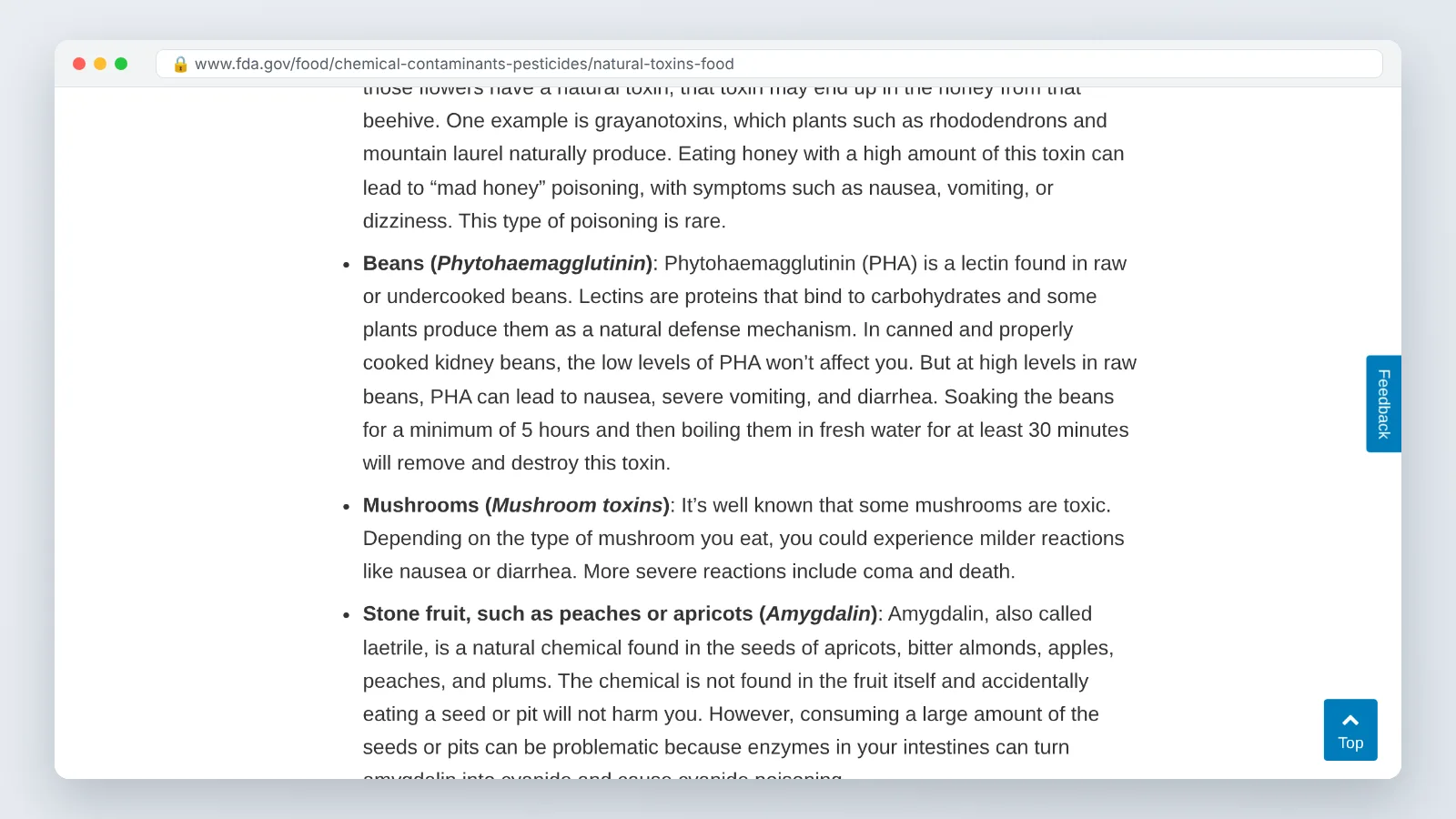
Safety is a separate job, and heat handles it alone. The FDA identifies phytohaemagglutinin (PHA) as a lectin present in raw or undercooked beans, which is why dried beans must be fully cooked rather than just warmed through.
The amount needed to make someone sick is small. Citing the FDA’s Bad Bug Book, K-State Research and Extension warns that as few as four or five improperly cooked red kidney beans can trigger severe vomiting within hours, followed by diarrhea.
That gives you one rule to hold onto. Soak beans because you want faster, prettier, more evenly cooked results. Boil them hard because you want safe ones.
Your Dried Bean Checklist: Equipment, Water Ratios and Yields
Figure out your yield before you open the bag. USDA WIC Works guidance states that one cup of dried beans yields roughly 3 cups once cooked, which is the ratio home cooks should use when scaling a recipe. A one-pound bag holds about two cups dry, so a single bag feeds a week of lunches.
Key numbers at a glance
- 10 minutes at 100 degrees C (212 degrees F): Food Safety News reports that boiling beans for this long has been found to completely destroy the bean toxin — the single non-negotiable step.
- 4 or 5 beans: citing the FDA’s Bad Bug Book, K-State Research and Extension warns that as few as four or five improperly cooked red kidney beans can trigger severe vomiting within hours, followed by diarrhea.
- 10 cups of water per pound (2 cups) of dry beans: University of Maine Cooperative Extension’s overnight soak ratio, refrigerated for 6–8 hours or overnight.
- 6 cups of water per 2 cups of dry beans: NDSU Extension’s quick-soak ratio before pressure cooking, boiled two to three minutes and soaked at least one hour.
- 1 cup dry to about 3 cups cooked: the USDA WIC Works yield ratio for scaling any bean recipe.
What you need
- A heavy pot with a lid, 5 to 8 quarts, for stovetop batches
- An electric or stovetop pressure cooker, if you are going that route
- A bowl big enough for the beans to double and still sit under water
- A colander, a slotted spoon and a timer you actually hear
- Jars or deli containers for storing the cooked beans in their liquid
Soak ratios from extension services
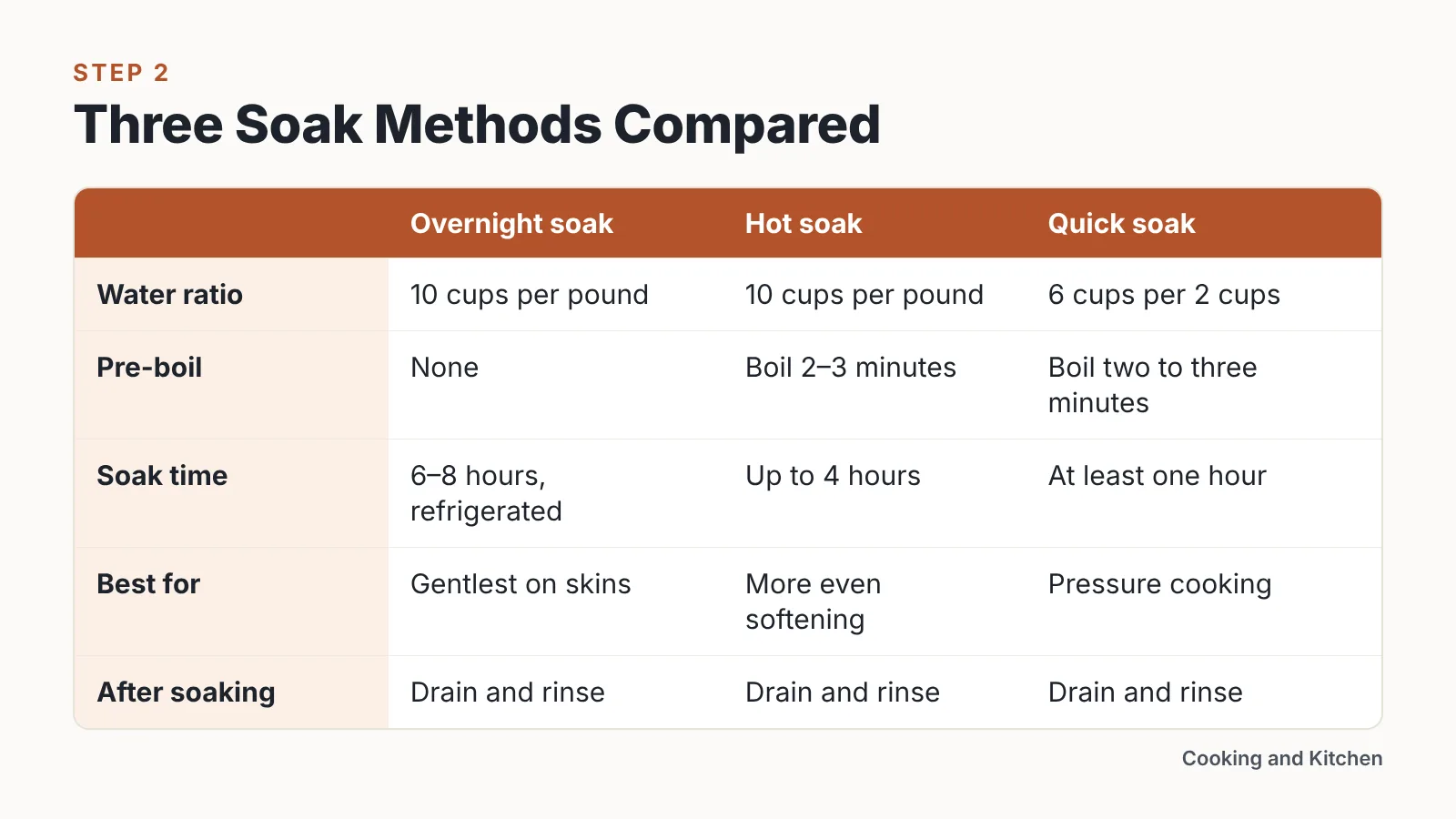
| Method | Dry beans | Water | Soak time |
|---|---|---|---|
| Overnight soak (University of Maine Cooperative Extension) | 1 pound (2 cups) | 10 cups | 6–8 hours or overnight, refrigerated |
| Hot soak (Nebraska Extension) | 1 pound (2 cups) | 10 cups | Boil 2–3 minutes, then soak up to 4 hours |
| Quick soak before pressure cooking (NDSU Extension) | 2 cups | 6 cups | Boil 2–3 minutes, then soak at least 1 hour |
Pot size matters more than people expect. Beans swell, foam and climb, so leave at least a hand’s width of headroom above the water line. Old beans are the other variable you cannot see — a bag that has sat in a pantry for two summers may never go fully tender, so buy from a store with turnover.
Step 1 — Sort, Rinse and Measure Your Dried Beans
Time: about 5 minutes. You need: a rimmed baking sheet, a colander, a measuring cup.
Pour the beans onto a rimmed baking sheet in a single layer and push them across it in small groups. You are hunting for pebbles, dirt clods, split shriveled beans and the occasional bean-shaped stone that looks exactly like the real thing. One pebble can crack a molar, and dried beans are field crops, not factory products.
Rinse the sorted beans under cool running water until the water runs clear. Dust and field soil cling to the skins, and that grit ends up in your broth if you skip this.
Measure now, not later. Working in cups rather than eyeballing a bag keeps you aligned with the soak ratios above, and it tells you whether your pot and your bowl are big enough. Two cups of dry beans need a bowl that holds at least four quarts: the 10 cups of soaking water in the extension ratios is already 2.5 quarts on its own, and the swelling beans sit on top of that.
If you are cooking kidney beans specifically, keep them separate from quicker-cooking beans like black-eyed peas. Mixed pots finish at different times, and the slowest bean sets your schedule.
Step 2 — Soak Three Ways: Overnight, Hot Soak or Quick Soak
Time: 1 hour to overnight. You need: a large bowl or your cooking pot, cold water, fridge space for the long soak.
The overnight soak is the gentlest on skins. University of Maine Cooperative Extension’s overnight soak method uses 10 cups of water per pound (2 cups) of dry beans, refrigerated for 6–8 hours or overnight. Refrigeration is the part people skip, and it is what keeps a warm-kitchen soak from going sour and foamy.
The hot soak cuts the wait and softens beans more evenly. Nebraska Extension’s hot-soak method calls for 10 cups of water per pound (2 cups) of dry beans, boiled 2–3 minutes and then soaked for up to 4 hours.
The quick soak is the weeknight version, and it pairs naturally with a pressure cooker. For pressure cooking, NDSU Extension’s quick-soak method uses 6 cups of water per 2 cups of dry beans, boiled two to three minutes and soaked at least one hour.
Drain and rinse after any of the three. Cook in fresh water, not the cloudy soaking liquid, unless you are specifically after a darker, earthier pot liquor.
Step 3 — Cook Them on the Stove: Hard Boil, Then Low Simmer
Time: typically 1 to 2 hours of unattended simmering — a rough kitchen range, not a tested figure, and older beans can run well past it. You need: a heavy lidded pot, fresh water, a slotted spoon.
Put the drained beans in the pot and add fresh water to cover them by two to three inches. Bring it to a full, loud, rolling boil over high heat — bubbles breaking the whole surface, not a lazy shimmer at the edges.
Hold that boil. Boiling beans for 10 minutes at 100 degrees C (212 degrees F) has been found to completely destroy the bean toxin, according to Food Safety News, which is why a hard boil rather than a bare simmer is the critical safety step. Skim the gray foam that rises in the first few minutes.
Drop the heat after the boil so the surface barely trembles. A violent boil for an hour tears skins off and turns the pot cloudy; a slow simmer keeps beans whole and the broth silky.
Keep the lid slightly ajar and check the water level every half hour. Beans should stay submerged the entire time, so add hot water from a kettle rather than cold water that stalls the pot. Start tasting around the 45-minute mark — again, a typical kitchen benchmark rather than a set time, since bean age, size and variety all move it — and keep tasting every 15 minutes after that.
Step 4 — Cook Them in a Pressure Cooker or Instant Pot
Time: about 10 minutes to come to pressure, a short cook, then a natural release. You need: a pressure cooker and its manual.
Soak first even here, because soaked beans cook more evenly under pressure and blow out less. For pressure cooking, NDSU Extension’s quick-soak method uses 6 cups of water per 2 cups of dry beans, boiled two to three minutes and soaked at least one hour.
Drain the soaked beans, add fresh water to cover them by an inch or two, and never fill the pot past the manufacturer’s maximum fill line. Beans foam, and foam clogs pressure valves — this is the one rule your cooker’s manual repeats in bold for a reason. A tablespoon of neutral oil tames the foam.
Cook on high pressure and let the pressure drop naturally rather than venting it fast. A quick release yanks liquid out of the beans and splits their skins almost instantly.
Cook times for beans are not standardized across machines — electric and stovetop models, bean varieties and bean age all push them around — so there is no universal number to give you here. Your cooker’s manual governs: follow the time it lists for your bean, start at the shortest option it offers, and taste. Undercooked beans can go back under pressure for a few more minutes; mushy ones cannot be rescued.
Step 5 — Season, Test for Doneness and Store the Beans in Their Liquid
Time: 10 minutes of finishing. You need: salt, a tasting spoon, jars or containers.
Salt the pot once the beans are tender enough to dent with a fingernail, then simmer them another ten minutes so the salt reaches the centers. Salting early will not stop beans from softening, but salting at the end leaves you with seasoned broth and bland interiors. Aromatics — a halved onion, garlic cloves, a bay leaf, a strip of kombu — can go in from the start.
Test three beans, not one. Pick one from the top, one from the middle and one from the bottom, and press each against the roof of your mouth. A done bean collapses to a smooth paste with no grainy core and no resistant skin.
Cool the beans in their cooking liquid, then refrigerate or freeze them submerged. That liquid is seasoned, starchy and does more for a soup than water ever will, and beans stored dry go leathery within a day.
Freeze in flat, meal-sized portions with a little headspace. A quart of beans plus broth thaws in a bowl of warm water faster than you can chop an onion.
Common Mistakes That Leave Beans Hard, Blown Out or Unsafe
The failure that sends people to urgent care is the slow cooker shortcut: dumping unsoaked kidney beans into a crock on low and letting them sit for eight hours. A low setting can hold beans hot without ever reaching a true boil, which is the exact condition the FDA’s warning about phytohaemagglutinin describes. Boil soaked kidney beans hard on the stove for the full 10 minutes first — not a quick blip of bubbles — and only then move them to the slow cooker if you like the convenience.
Hard beans usually trace back to age or acid. Tomatoes, vinegar and molasses firm up bean skins, so add them after the beans are already tender.
Blown-out beans usually trace back to heat. A rolling boil for the full cook, or a fast pressure release, strips skins and turns the pot into mush.
Final checklist
- Sorted on a sheet pan and rinsed until the water runs clear
- Soaked using one of the three ratios above, then drained and rinsed
- Fresh water added to cover by two to three inches
- Brought to a full rolling boil and held there for 10 minutes
- Simmered gently, lid ajar, beans always submerged
- Salted near the end and tasted from three spots in the pot
- Cooled and stored in the cooking liquid, flat-frozen in meal portions
This is general food-safety information for home cooks, not medical advice; if you suspect bean-related illness, contact a clinician or poison control.
Frequently asked questions
Do I have to soak dried beans before cooking them?
No, but unsoaked beans take considerably longer and split more. Soaking hydrates the seed so it cooks evenly, and the drained soak water carries off some gas-producing sugars. Either way, the hard boil is non-negotiable for safety.
How much water do I use to soak a pound of dried beans?
University of Maine Cooperative Extension’s overnight soak method uses 10 cups of water per pound (2 cups) of dry beans, refrigerated for 6–8 hours or overnight. Nebraska Extension’s hot-soak method uses the same 10 cups per pound, boiled 2–3 minutes and soaked up to 4 hours.
Why can’t I cook dried kidney beans in a slow cooker?
A slow cooker on low may hold beans hot without reaching boiling. Citing the FDA’s Bad Bug Book, K-State Research and Extension warns that as few as four or five improperly cooked red kidney beans can trigger severe vomiting within hours, followed by diarrhea. Boil them hard on the stove for 10 minutes first.
How long do I need to boil beans to make them safe?
Boiling beans for 10 minutes at 100 degrees C (212 degrees F) has been found to completely destroy the bean toxin, according to Food Safety News, which is why a hard rolling boil rather than a bare simmer is the step you cannot skip.
How many cups of cooked beans does one cup of dry beans make?
USDA WIC Works guidance states that one cup of dried beans yields roughly 3 cups once cooked, so a standard one-pound bag holding about two cups dry gives you roughly six cups cooked — enough for a pot of chili plus leftovers.
Sources
- Natural Toxins in Food — U.S. Food and Drug Administration
- Do Not Cook Dry Beans in Your Slow Cooker — K-State Research and Extension, Johnson County
- How to avoid poisoning from red beans — Food Safety News
- How to Store and Cook Dried Beans — University of Maine Cooperative Extension
- How to Cook Dry Beans from Scratch — Nebraska Extension (food.unl.edu)
- Field to Fork: Pressure Cook Dry Beans to Save Money and Time — NDSU Extension
- What Do I Do With Beans? — USDA WIC Works Resource System
AI tools helped write this guide. The Cooking and Kitchen Editorial Team published it after checking every figure against the sources linked above.
Related articles

Cooking and Kitchen Editorial Team
Articles on Cooking and Kitchen are written by the editorial team with AI assistance and checked against the cited sources.


You May Also Like
How to Use a Kitchen Scale for Accurate Baking
How to Choose a Set of Kitchen Utensils in 2026