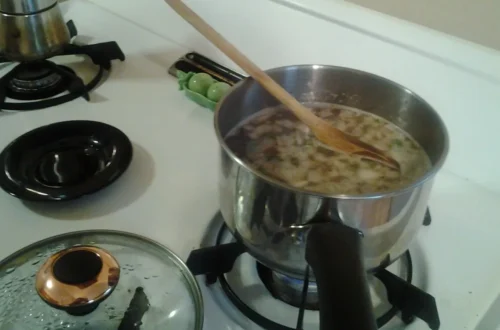
How to Cook Oatmeal That Turns Out Creamy Every Time
Use 1/2 cup old-fashioned oats to 1 cup liquid on the stove for about 5 minutes, 2 1/2 to 3 minutes on HIGH in the microwave, or a 1:1 soak overnight in the fridge.
Why Most Oatmeal Turns Out Gluey (And What Creamy Really Means)
Gluey oatmeal and creamy oatmeal start from the same bag. The difference is how much starch you beat out of the flakes and how much liquid is left holding them together at the end.
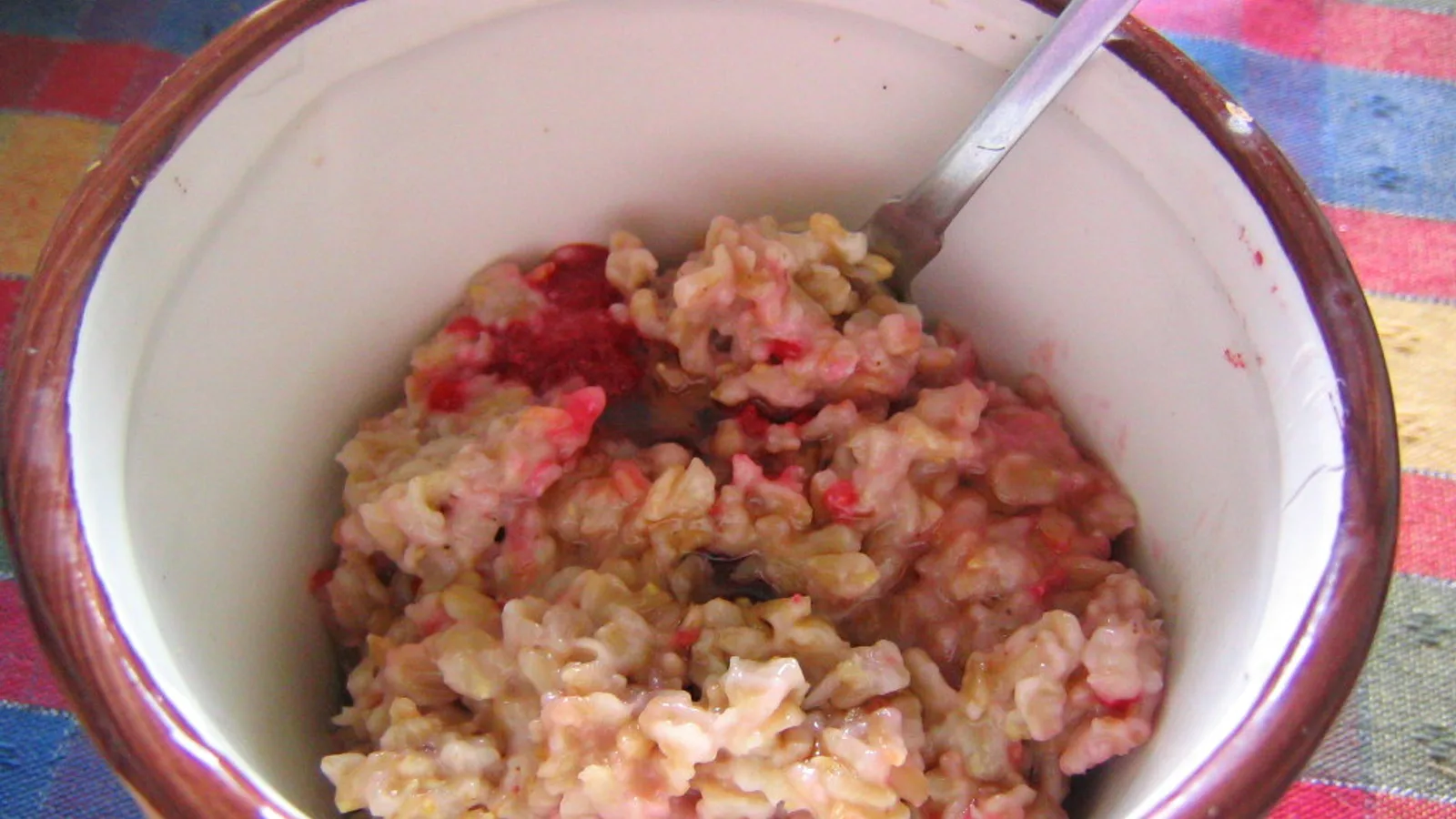
Creamy means the flakes still have shape, the liquid around them has thickened into a loose sauce, and the spoon leaves a track that slowly fills back in. Gluey means the flakes have collapsed into paste, usually from constant stirring, too little liquid, or a long simmer on high heat. Paste also forms when oatmeal sits in a hot pan after the burner is off.
The thickening power comes from soluble fiber inside the flake. Federal regulation in the United States defines rolled oats, or oatmeal, as 100 percent dehulled oat groats that are steamed, cut, rolled and flaked and that supply at least 4 percent beta-glucan soluble fiber on a dry-weight basis. That fiber is what turns plain water into something that coats a spoon.
Your job is to release that fiber slowly. Heat, time and a measured amount of liquid do the work. Aggressive stirring with a whisk does the opposite.
Step 1 — Choose Your Oat and Lock In the Liquid Ratio
Time: 2 minutes. You need: a dry measuring cup, a liquid measuring cup, salt, and the right pot or bowl.
Pick the oat first, because the ratio follows the cut. Rolled oats, instant oats and steel-cut oats absorb water at completely different rates, and swapping one for another without changing the liquid is the most common reason a batch comes out either soupy or cement-thick.
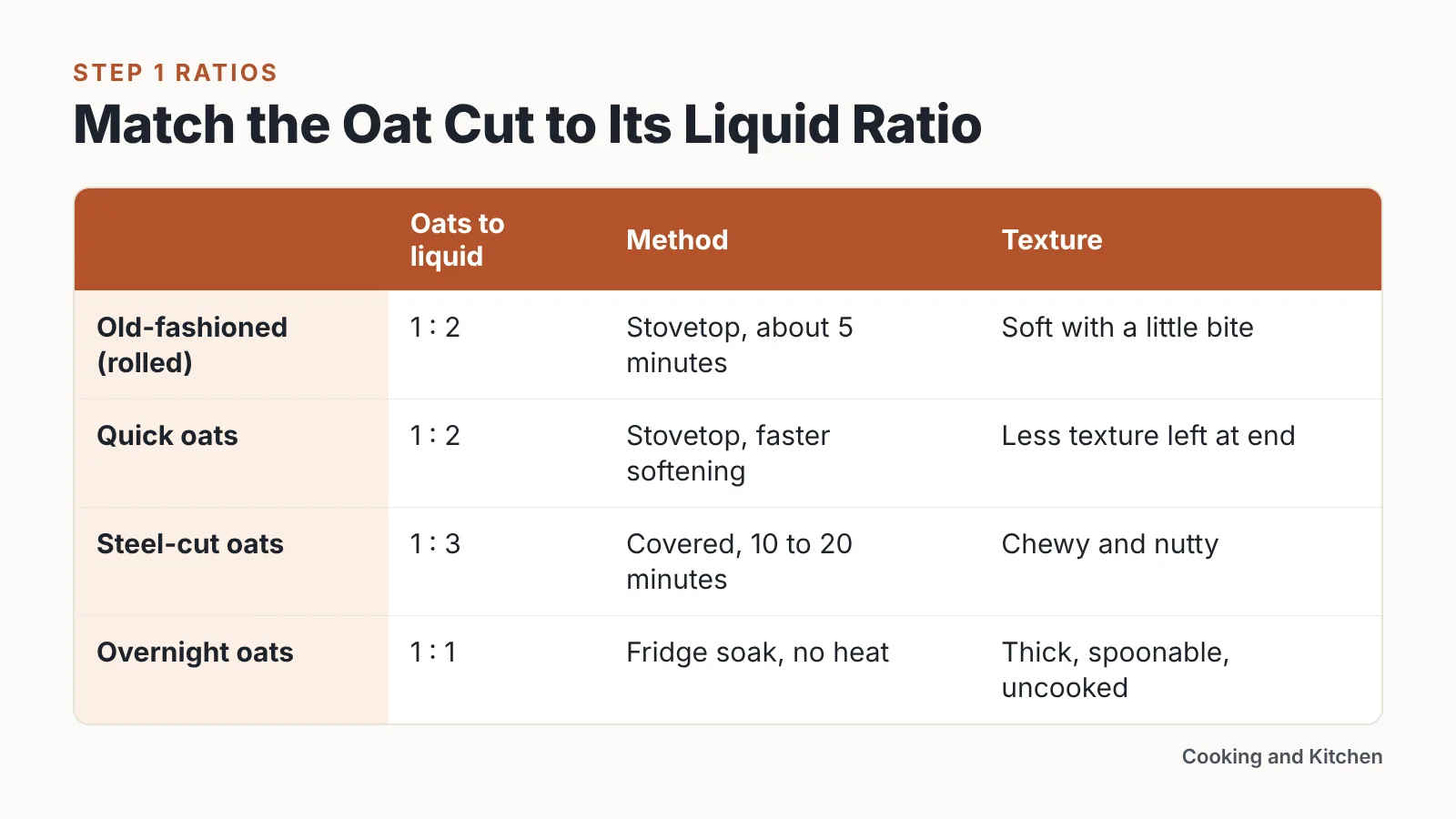
Quaker’s official preparation guide specifies a single stovetop serving of old-fashioned oats as 1/2 cup oats to 1 cup water or milk plus a dash of salt. Bob’s Red Mill’s bag instructions for steel-cut oats use 1 cup oats to 3 cups water with 1/2 teaspoon salt. Those two numbers cover most mornings.
- Old-fashioned (rolled) oats — 1 part oats to 2 parts liquid. Best all-around creaminess, soft with a little bite.
- Quick oats — same 1:2 ratio, thinner flakes, faster softening, less texture left at the end.
- Steel-cut oats — 1 part oats to 3 parts water. Chewy, nutty, needs a lid and real time.
- Overnight oats — 1 part rolled oats to 1 part milk, no heat at all.
Measure the oats with a dry cup leveled off, not scooped and heaped. A heaped half-cup can push you well past the ratio and turn a creamy bowl into a dense one. Water gives you the cleanest oat flavor; milk gives you more body and browns slightly at the edge of the pan.
Step 2 — Cook Creamy Stovetop Oatmeal in About 5 Minutes
Time: about 8 minutes including the boil. You need: a small heavy saucepan, a wooden spoon or silicone spatula.
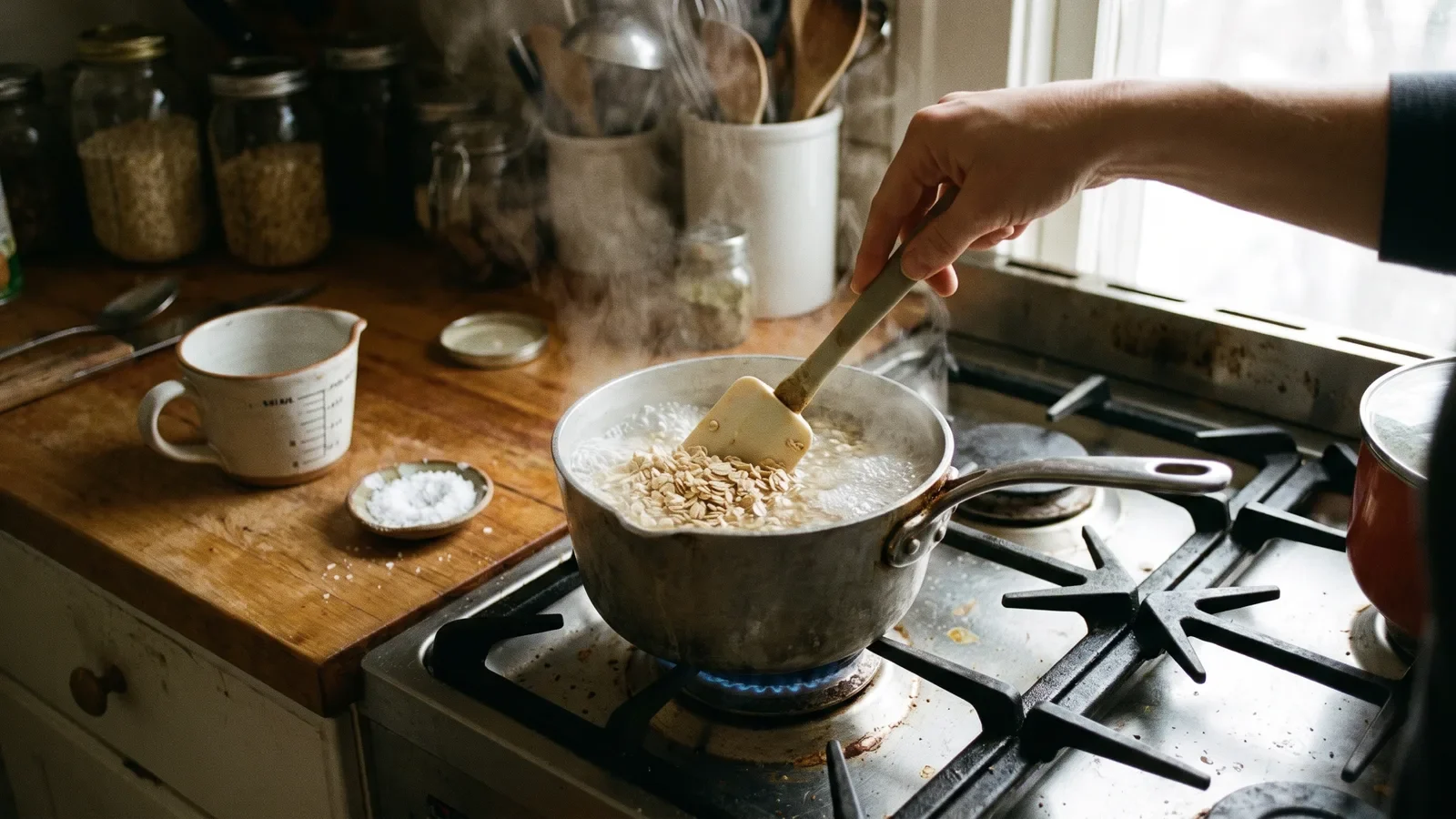
Bring the measured liquid and salt to a boil before the oats go in. Dropping oats into cold water and heating them together gives the flakes a long, slow soak that strips starch into the liquid and flattens the texture.
Quaker directs home cooks to stir old-fashioned oats into boiling liquid and cook them about 5 minutes over medium heat. Drop the heat as soon as the oats hit the pan so the surface simmers rather than rolls. Stir two or three times total, scraping the bottom corners, and stop there.
Steel-cut oats run on a different clock. Bob’s Red Mill’s steel-cut instructions call for covering the pot and cooking 10 to 20 minutes depending on how chewy you want the cereal. Check at the 10-minute mark if you like a firm grain, and let it run toward 20 for something softer.
You are looking for a pan that still has visible liquid when you kill the heat. Oatmeal keeps thickening for a minute or two off the burner, so a batch that looks perfect in the pot will be stiff in the bowl. Pull it one notch looser than you want to eat it.
Step 3 — Make a Single Microwave Bowl Without the Boil-Over
Time: under 5 minutes. You need: a wide microwave-safe bowl at least twice the volume of the finished oatmeal.
Microwave oatmeal fails for one reason: the bowl is too small and the starchy foam climbs over the side. Choose a bowl that looks absurdly large for half a cup of oats and the problem disappears.
Quaker’s microwave method for one serving is 2 1/2 to 3 minutes on HIGH, with a stir before serving. Use the same 1/2 cup oats to 1 cup liquid ratio from Step 1, plus a pinch of salt stirred in before heating.
Run the first 90 seconds, stop the microwave, and stir once. That break knocks down the foam and evens out the hot spots that form around the edge of the bowl. Finish the remaining time, stir again, and let the bowl sit on the counter for a minute before you eat.
Milk foams harder than water. If you want a fully milk-based bowl, use a deeper vessel, cut the power level to about 70 percent as a matter of technique, and add roughly 30 seconds to compensate. Watch the first minute of the second interval rather than walking away.
Step 4 — Soak Overnight Oats 1:1 and Chill Them Safely
Time: 5 minutes of work, then an overnight rest. You need: a jar or container with a lid and refrigerator space.
Overnight oats use less liquid than cooked oatmeal because nothing evaporates. Quaker’s overnight oats formula uses a 1:1 ratio of 1/2 cup old-fashioned oats to 1/2 cup milk, with no cooking required.
Stir the oats and milk together in the jar, add a pinch of salt, then fold in yogurt, chia seeds, fruit or sweetener before the lid goes on. Chia will tighten the mixture overnight, so add an extra splash of milk if you use more than a spoonful. Rolled oats work here; steel-cut oats stay gritty and instant oats go slack.
Quaker advises steeping overnight oats at least 8 hours in a refrigerator set to 40°F or colder and eating them within 24 hours. The USDA Food Safety and Inspection Service warns that bacteria multiply quickly between 40°F and 140°F, which is why a jar of soaking oats belongs in the fridge rather than on the counter. The same rule applies to a big pot of cooked oatmeal you plan to reheat through the week.
Make two or three jars at once, not seven. The window is short enough that a week’s worth will outlive its quality and its safe stretch.
Step 5 — Season, Rest and Adjust the Texture Before Serving
Time: 2 to 3 minutes. You need: salt, a splash of extra liquid, and whatever topping you like.
Salt goes into the liquid at the start, not over the finished bowl. A dash dissolved in the cooking water seasons every flake, while salt sprinkled on top reads as sharp and sits unevenly on the surface.
Rest the pan off the heat for a minute or two before serving. That pause lets the flakes finish absorbing and firms the texture into something spoonable instead of soupy. If it tightens past what you want, stir in a tablespoon of milk at a time until the oatmeal slumps slowly off the spoon.
Finish with contrast rather than volume: toasted nuts for crunch, a spoon of yogurt or a squeeze of citrus for acidity, brown sugar or maple stirred in at the very end so it does not scorch in the pan. Fruit that releases water, like berries, goes on top of the bowl, not into the pot.
US federal labeling rules tie the oat heart-health claim to eating 3 grams or more per day of beta-glucan soluble fiber from whole oats or barley, which is a labeling standard for products sold in the United States and not a personal prescription. Other countries set their own claim rules. This is general information, not medical advice.
Creamy Oatmeal Checklist: Ratios, Times and Temperatures at a Glance
The five steps above collapse into a short set of numbers worth keeping on the inside of a cabinet door. Match the oat to the ratio, match the ratio to the method, and the texture takes care of itself.
| Method | Oats and liquid | Time | Source of the numbers |
|---|---|---|---|
| Stovetop, old-fashioned | 1/2 cup oats to 1 cup water or milk, dash of salt | About 5 minutes over medium heat | Quaker |
| Stovetop, steel-cut | 1 cup oats to 3 cups water, 1/2 tsp salt | 10 to 20 minutes, covered | Bob’s Red Mill |
| Microwave, single serving | 1/2 cup oats to 1 cup liquid | 2 1/2 to 3 minutes on HIGH, stir before serving | Quaker |
| Overnight oats | 1/2 cup oats to 1/2 cup milk | At least 8 hours at 40°F or colder, eat within 24 hours | Quaker |
Run through this before you turn on the burner:
- Oats measured level in a dry cup, liquid measured in a liquid cup.
- Salt added to the liquid, not sprinkled at the table.
- Liquid boiling before rolled oats go in.
- Heat lowered to a simmer once the oats are in the pan.
- Stirring limited to two or three passes for rolled oats.
- Pan pulled while the oatmeal still looks slightly loose.
- Microwave bowl at least double the finished volume.
- Jars of overnight oats in the fridge within minutes of mixing.
Common Mistakes That Ruin Oatmeal (And How to Fix Them)
The single most common failure is stirring constantly, the way you would stir risotto. Every pass of the spoon shears starch off the flakes into the liquid, and within a few minutes you have paste with oat-shaped lumps in it. Stir two or three times for rolled oats, scraping the bottom so nothing scorches, and leave the spoon out of the pan the rest of the time.
The second failure is guessing the ratio. Eyeballing a scoop of oats and a glug of milk works once in five tries, and the other four are either watery or stiff.
Other fixes worth memorizing:
- Boiled over in the microwave? The bowl was too small. Move to a wider, deeper one and stir at the halfway point.
- Steel-cut oats still hard at 10 minutes? Keep the lid on and continue toward the 20-minute end of Bob’s Red Mill’s range.
- Bowl stiffened while you set the table? Stir in warm milk a tablespoon at a time until it loosens.
- Overnight oats watery in the morning? You used a cooked-oatmeal ratio. Go back to equal parts oats and milk.
- Flat, dull flavor? Salt was left out of the cooking liquid, and no topping fixes that after the fact.
Burnt bottoms come from a thin pan on high heat. Use the heaviest small saucepan you own, keep the flame at a simmer, and scrape the corners once midway through.
Frequently asked questions
What is the correct oats-to-water ratio for creamy oatmeal?
For rolled oats, Quaker’s preparation guide specifies 1/2 cup oats to 1 cup water or milk plus a dash of salt per serving, which is a 1:2 ratio. Steel-cut oats need far more liquid, and Bob’s Red Mill calls for 1 cup oats to 3 cups water with 1/2 teaspoon salt.
How long should oatmeal cook on the stove?
Quaker directs home cooks to stir old-fashioned oats into boiling liquid and cook them about 5 minutes over medium heat. Steel-cut oats take much longer: Bob’s Red Mill’s instructions call for covering the pot and cooking 10 to 20 minutes depending on how chewy you want the finished cereal.
How do I microwave oatmeal without it boiling over?
Use a bowl at least twice the volume of the finished oatmeal and stir at the halfway point to knock the foam down. Quaker’s microwave method for one serving is 2 1/2 to 3 minutes on HIGH, with a stir before serving, and milk-based bowls foam more than water-based ones.
How long do overnight oats need to soak, and how long do they keep?
Quaker advises steeping overnight oats at least 8 hours in a refrigerator set to 40°F or colder and eating them within 24 hours. The USDA Food Safety and Inspection Service warns that bacteria multiply quickly between 40°F and 140°F, so keep the jar cold from the moment you mix it.
Why does my oatmeal turn out gluey instead of creamy?
Constant stirring shears starch out of the flakes and turns them to paste, and too little liquid speeds that up. Stir rolled oats only two or three times, keep the pan at a simmer rather than a hard boil, and pull it off the heat while the oatmeal still looks slightly loose.
Sources
- How To Cook Oats – Traditional, Instant, Steel Cut | Quaker Oats
- Old Fashioned Quaker Oats – Product Details
- Overnight Oats 3 Ways Recipe | Quaker Oats
- Horchata Overnight Oats Recipe | Quaker Oats
- Basic Preparation Instructions for Steel Cut Oats | Bob’s Red Mill
- Gluten Free Steel Cut Oats Cooking Instructions | Bob’s Red Mill
- eCFR :: 21 CFR 101.81 — Health claims: Soluble fiber from certain foods and risk of coronary heart disease (CHD)
- Leftovers and Food Safety | USDA Food Safety and Inspection Service
AI tools helped write this guide. The Cooking and Kitchen Editorial Team published it after checking every figure against the sources linked above.
Related articles

Cooking and Kitchen Editorial Team
Articles on Cooking and Kitchen are written by the editorial team with AI assistance and checked against the cited sources.


You May Also Like

How to Cook Frozen Crab Legs by Steaming, Boiling or Baking
How to Cook Beef Liver Without a Bitter, Tough Bite