How to Cook Oyster Mushrooms So They Crisp, Not Steam
Dry-sear torn oyster mushrooms in a wide, uncrowded skillet over medium-high heat until their water evaporates, then add fat, press them flat for golden edges, and salt only at the very end.
Why Oyster Mushrooms Turn Soggy — and What "Crisp" Actually Requires
Oyster mushrooms reach your kitchen as soft, fan-shaped clusters with a spongy internal structure that holds liquid like a damp dish towel. A study published in Food Science & Nutrition (Wiley) measured fresh oyster mushrooms (Pleurotus ostreatus) at 88.75% moisture, meaning almost nine-tenths of their raw weight is water that has to leave before the surface can brown. Heat alone does not crisp them. Evaporation does.
A crowded, under-heated pan traps escaping steam, and the mushrooms end up simmering in their own liquid. Their surface temperature stalls around the boiling point of water, well below the range where browning happens. What you get is gray, floppy and faintly squeaky.
Crisping is a two-stage job that has to happen in order: dry the outer layer, then brown the dried layer. Skip the first stage and the second one never arrives.
What you are aiming for
- Soggy: pale edges, visible liquid pooling in the pan, mushrooms that fold rather than snap, a rubbery chew.
- Crisp: deep brown frilly edges, a dry pan surface, a faint crackle when you press a piece with tongs, meaty centers.
Before You Start: Pan, Fat, Heat and Prep Checklist
Browning has a temperature floor, and your pan has to clear it. MasterClass explains that the Maillard reaction — the browning that gives seared mushrooms their color and savory flavor — runs at roughly 140–165 °C (280–330 °F), far above the temperature of a wet, steaming pan. A pan full of mushroom liquid cannot reach that range until the liquid is gone.
Good oyster mushrooms are not a throwaway ingredient either. In its Mushrooms report published in August 2025, USDA NASS recorded the average U.S. grower price for oyster mushrooms rising across three seasons, from 3.07 to 4.80 to 5.18 dollars per pound. Cooking a half-pound badly is a real loss.
| What you need | Pick this | Why it matters |
|---|---|---|
| Pan | Cast iron or heavy carbon steel, the widest one you own | Holds heat when cold mushrooms hit it; surface area speeds evaporation |
| Fat | Neutral high-heat oil for the sear, butter only at the finish | Butter solids burn long before the mushrooms finish browning |
| Heat | Medium-high, preheated until a water drop skitters | A lukewarm pan steams instead of searing |
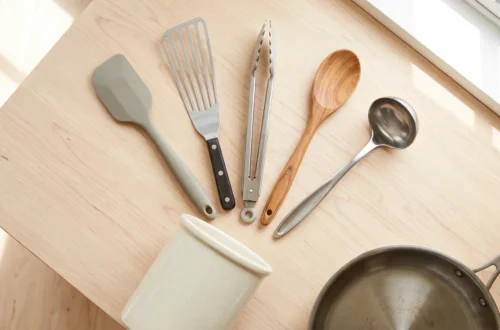
| Tools | Tongs, a second smaller skillet or bacon press, paper towels | Pressing doubles the contact area that browns |
| Batch size | Enough mushrooms for a single uncrowded layer | Overlap traps steam under the pieces |
Plan on cooking in two batches rather than one crowded pile. Twelve extra minutes beats a pan of wet mushrooms.
Step 1 — Clean and Tear Instead of Soaking and Slicing
Time: about 5 minutes. You need: a dry pastry brush or paper towel, a cutting board, your hands.
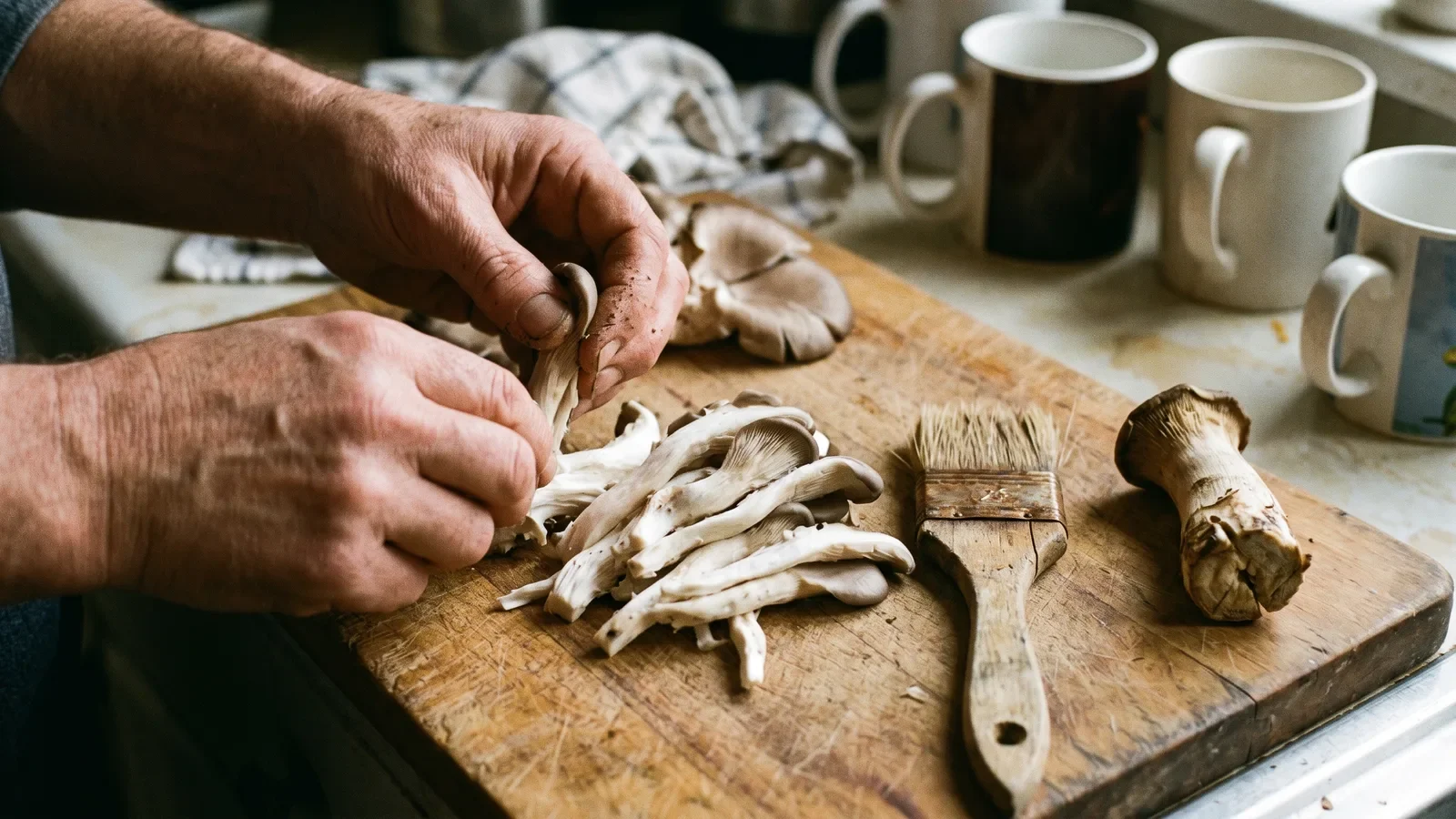
Brush grit off the caps with a dry brush, and wipe stubborn spots with a barely damp paper towel. Trim the tough base where the cluster was attached to its growing block, keeping as much of the tender stem as you can. Soaking in a bowl of water undoes everything the pan is about to do.
Tear the cluster along its natural grain into pieces roughly the width of two fingers. Torn edges are ragged and uneven, and those frayed frills are what turn crackly and dark in hot fat. A knife gives you flat, sealed faces that brown more slowly and look uniform in a dull way.
Keep the mushrooms in the refrigerator until the pan is hot. Nothing about mushrooms makes them unusually hazardous; the goal is simply to keep room-temperature holding time short. USDA FSIS warns that bacteria grow fastest between 40 and 140 °F — the "Danger Zone" — doubling in as little as 20 minutes, so the less time a bowl of torn pieces spends on the counter, the better. Prep the rest of your dish first, then pull them out.
Step 2 — Dry-Sear in a Wide, Uncrowded Pan to Drive Off the Water
Time: 6 to 10 minutes. You need: the preheated dry skillet, tongs, a timer.
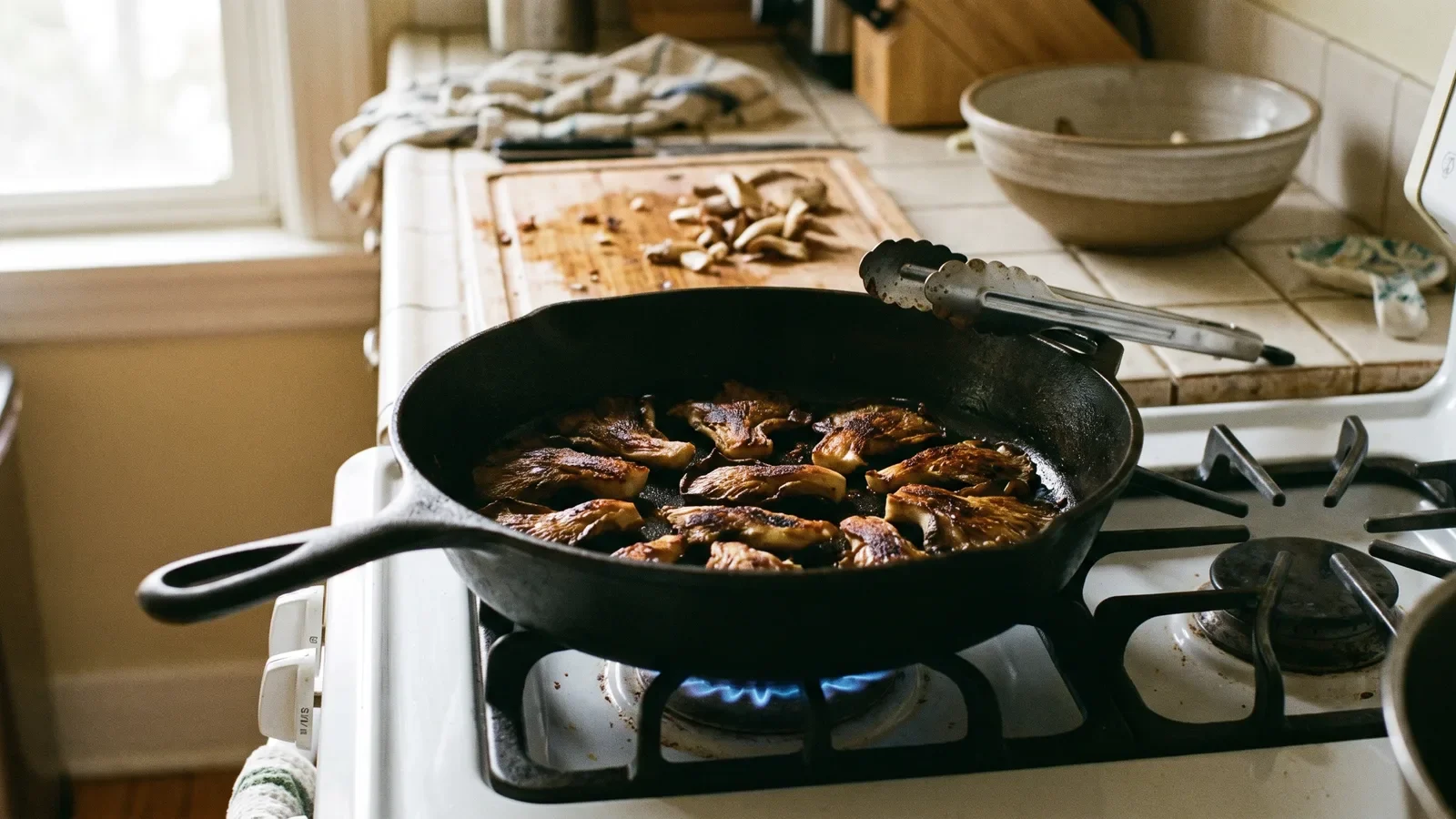
Put the torn mushrooms into the hot, completely dry pan in a single layer. They will squeak, release liquid, and look alarmingly wet for the first few minutes. That is the water from inside the cells leaving, and your job is to let it go rather than lid it in.
Low heat will not rescue you here, because mushrooms give up water slowly unless the energy is high. Researchers writing in Current Research in Food Science chose 70 °C for dehydrating Pleurotus and still needed 520 minutes of drying time, evidence that gentle heat removes mushroom water very slowly. In a separate study, published in Food Science & Nutrition, sun-drying oyster mushroom slices took 4–5 days to reach a target moisture content of about 12% — the same lesson at ambient conditions.
Stir only every couple of minutes. You want contact, not motion. When the pan surface looks dry again and the pieces have shrunk by roughly half, the water stage is finished.
Step 3 — Add Fat and Press for Golden, Crisp Edges
Time: 3 to 5 minutes. You need: neutral oil, a smaller heavy skillet or bacon press, tongs.
Pour in enough neutral oil to slick the pan — a generous tablespoon or two for a half-pound batch — and let it shimmer before you touch anything. Fat added at this point conducts heat into every frill and ridge that air alone cannot reach. Fat added at the start would have insulated the mushrooms and held their own steam against them.
Set the smaller skillet directly on top of the mushrooms and leave it there for about 90 seconds. Pressing forces the curled edges flat against the hot metal, which is where the browning happens fastest. Lift, flip with tongs, press the second side.
A knob of butter in the final minute adds nutty depth, but add it late because milk solids darken quickly at searing heat. Finish with smashed garlic or thyme sprigs in the same last minute. Pull the pan off the heat while the edges are deep brown rather than black.
Step 4 — Season at the End and Serve Within Minutes
Time: 1 to 2 minutes. You need: flaky salt, black pepper, an acid such as lemon or sherry vinegar.
Salt draws water to the surface by osmosis, which is useful for brining and ruinous for crisping. Hold it back until the mushrooms are already brown and the pan is dry. A pinch of flaky salt off the heat sticks to the oiled surface and stays there.
Black pepper, a squeeze of lemon, a splash of soy sauce or a shower of chopped parsley all work, but add them off the burner so nothing re-wets the pan. If you want a glaze, reduce the liquid separately and toss at the very last second.
Crisp oyster mushrooms have a short window. Steam continues escaping after the pan comes off the heat, and if those pieces sit in a covered bowl or stacked in a pile, the trapped vapor softens the crust within minutes. Spread them on a warm plate in one layer and get them to the table.
Oven, Air-Fryer and Deep-Fried Variations That Still Stay Crisp
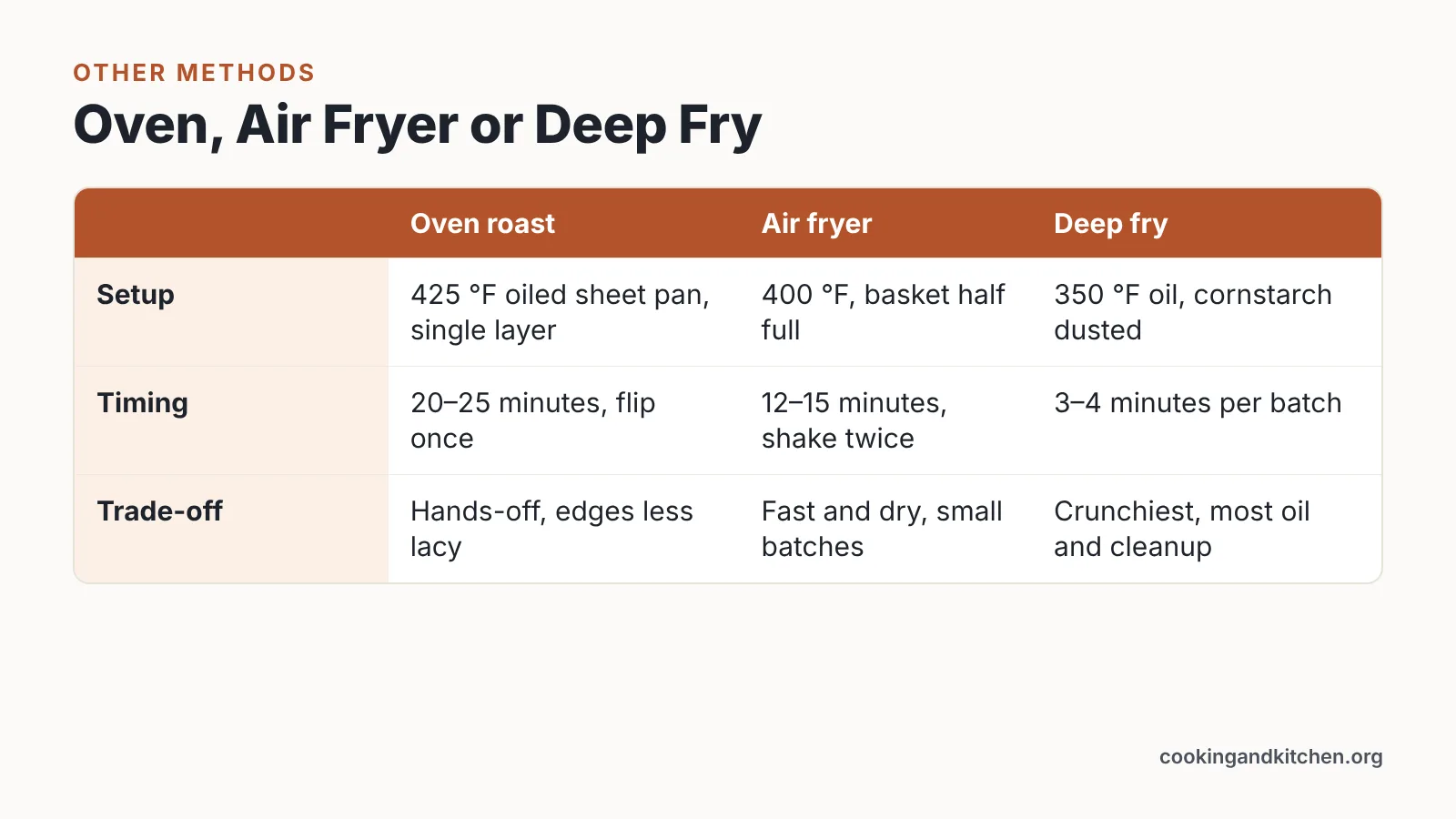
Each method needs the same thing: room around every piece and enough heat to clear the browning threshold. HowStuffWorks puts the browning window at 285–355 °F (140–179 °C), slightly higher than some other food-science explainers. Remember, though, that a dial setting describes the air in the oven, not the surface of the food: while a mushroom is still shedding water, its surface hovers near the boiling point of water no matter what the thermostat says, which is why a moderate oven and a crowded pan both disappoint.
The settings and times below are our own test-kitchen guidance, not figures drawn from the research cited above.
| Method | Setup (editorial guidance) | Timing guide (editorial guidance) | Trade-off |
|---|---|---|---|
| Oven roast | 425 °F, oiled sheet pan, single layer, flip once | 20–25 minutes | Hands-off, but edges are less lacy than a skillet sear |
| Air fryer | 400 °F, half-full basket, shake twice | 12–15 minutes | Fast and dry; small batches only |
| Deep fry | Battered or cornstarch-dusted, 350 °F oil | 3–4 minutes per batch | Crunchiest texture; most oil and cleanup |
For the air fryer, toss the torn pieces with a light coat of oil and no salt until they come out. For deep-frying, a dry cornstarch dusting clings better than flour and fries into a thinner shell.
Drying them out completely is a different project with a different goal. The Current Research in Food Science paper notes that dehydration is used to bring fresh mushrooms down to 5% moisture or less for storage, which produces a shelf-stable ingredient rather than a crisp side dish.
Common Mistakes That Leave Oyster Mushrooms Rubbery or Wet
The failure that shows up most often: oil and salt go into the pan at the same time as the raw mushrooms. Salt pulls water out, oil traps the steam under each piece, and the batch braises itself gray. Fix it by searing dry first, oiling second, salting last — the order in Steps 2 through 4 above.
Other habits worth breaking:
- Rinsing under the tap. You add surface water to an ingredient already close to nine-tenths water.
- Crowding the pan. Overlapping pieces shield each other from the hot metal.
- Constant stirring. Browning needs uninterrupted contact, not agitation.
- Slicing with a knife. Flat faces brown slower and skip the crackly frills.
- Covering the finished mushrooms. Trapped steam softens the crust in under five minutes.
These mushrooms are no longer a niche item: in the 2024-2025 season, U.S. sales of commercially grown specialty mushrooms — the category that includes oyster mushrooms — reached $95.0 million, up 10 percent year over year, according to the USDA NASS Mushrooms report published in August 2025.
Final crisping checklist
- Brushed clean, never soaked.
- Torn by hand into two-finger pieces.
- Straight from the fridge into a preheated dry pan.
- Single uncrowded layer, cooked in batches.
- Dry-seared until the pan surface looks dry again.
- Oil added only after the water is gone, then pressed flat.
- Salt, acid and herbs off the heat, served uncovered within minutes.
Frequently asked questions
Why do my oyster mushrooms release so much water in the pan?
Because they are mostly water to begin with. A study in Food Science & Nutrition measured fresh oyster mushrooms at 88.75% moisture, so almost nine-tenths of their raw weight has to evaporate before the surface can brown and crisp.
Should I wash oyster mushrooms before cooking them?
Brush them with a dry pastry brush or wipe them with a barely damp paper towel instead. Rinsing or soaking adds surface water to an ingredient that already struggles to dry out, which directly delays browning in the pan.
Do I need oil in the pan from the start?
No — start completely dry. Fat added at the beginning insulates each piece and traps the steam coming out of it, so add oil only after the mushroom liquid has evaporated and the pan surface looks dry again.
What temperature does the pan need to reach for browning?
MasterClass explains that the Maillard reaction runs at roughly 140–165 °C (280–330 °F), far above the temperature of a wet, steaming pan, which is why a crowded skillet full of liquid never browns anything.
Can I prep torn oyster mushrooms hours before cooking?
Yes — tear them ahead and keep the pieces covered in the refrigerator, pulling them out only once the skillet is hot. Mushrooms are not a high-risk food; the aim is just to keep their time on the counter short, since USDA FSIS notes that bacteria multiply fastest between 40 and 140 °F, doubling in as little as 20 minutes.
Sources
- Nutritional quality of Oyster Mushroom (Pleurotus ostreatus) as affected by osmotic pretreatments and drying methods — Food Science & Nutrition (Wiley)
- Modelling drying kinetic of oyster mushroom dehydration — Current Research in Food Science (ScienceDirect)
- Maillard Reaction Explained: What Is the Maillard Reaction? — MasterClass
- The Maillard Reaction and the Science of Browning Foods — HowStuffWorks
- Refrigeration & Food Safety — USDA Food Safety and Inspection Service
- Mushrooms (August 2025) — USDA National Agricultural Statistics Service
AI tools helped write this guide. The Cooking and Kitchen Editorial Team published it after checking every figure against the sources linked above.
Related articles

Cooking and Kitchen Editorial Team
Articles on Cooking and Kitchen are written by the editorial team with AI assistance and checked against the cited sources.


You May Also Like
How to Use a Kitchen Scale for Accurate Baking
Meal Prep Ideas for the Week That Last to Friday