How to Cook Frozen Broccoli Without the Mush
Cook it straight from the freezer, never thawed: knock off loose ice, spread the florets in a single layer on a preheated pan, and use high dry heat until edges brown and stems stay crisp-tender.
Why Frozen Broccoli Goes Mushy — and the One Thing That Fixes It
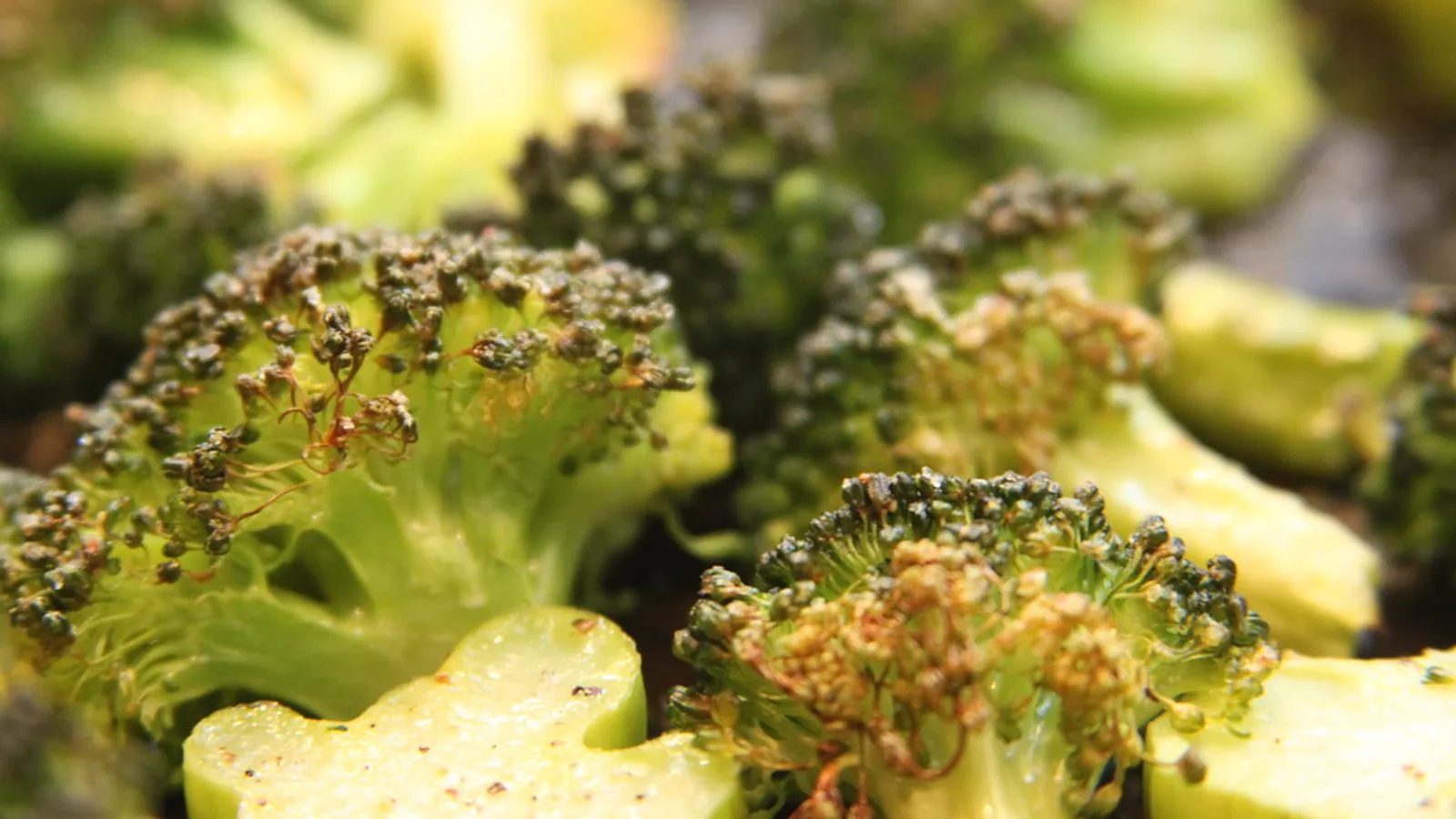
The bag in your freezer does not hold raw vegetables. According to the National Center for Home Food Preservation at the University of Georgia, broccoli is blanched 3 minutes in boiling water or 5 minutes in steam before it is frozen. That head start explains why a gentle simmer turns the florets to paste in minutes.
Water is the second half of the problem. Frozen chopped broccoli is roughly 92.1% water by weight according to USDA Food Data Central composition data. Freezing turns part of that water into ice crystals that puncture cell walls, so the moment the florets warm, liquid leaks out and pools around them.
Any cooking method that keeps the broccoli surrounded by its own steam will give you limp, olive-green pieces. A covered microwave bowl does it. A pot of simmering water does it faster.
One change fixes most of it: cook the florets in heat dry enough and hot enough to drive surface moisture off before the stems collapse. Dry heat browns. Wet heat boils. Everything in the steps below exists to keep the florets on the dry side of that line.
Step 1 — Cook It Straight From the Freezer (Never Thaw First)
Time: zero extra prep. What you need: the frozen bag and a pan that is already hot.
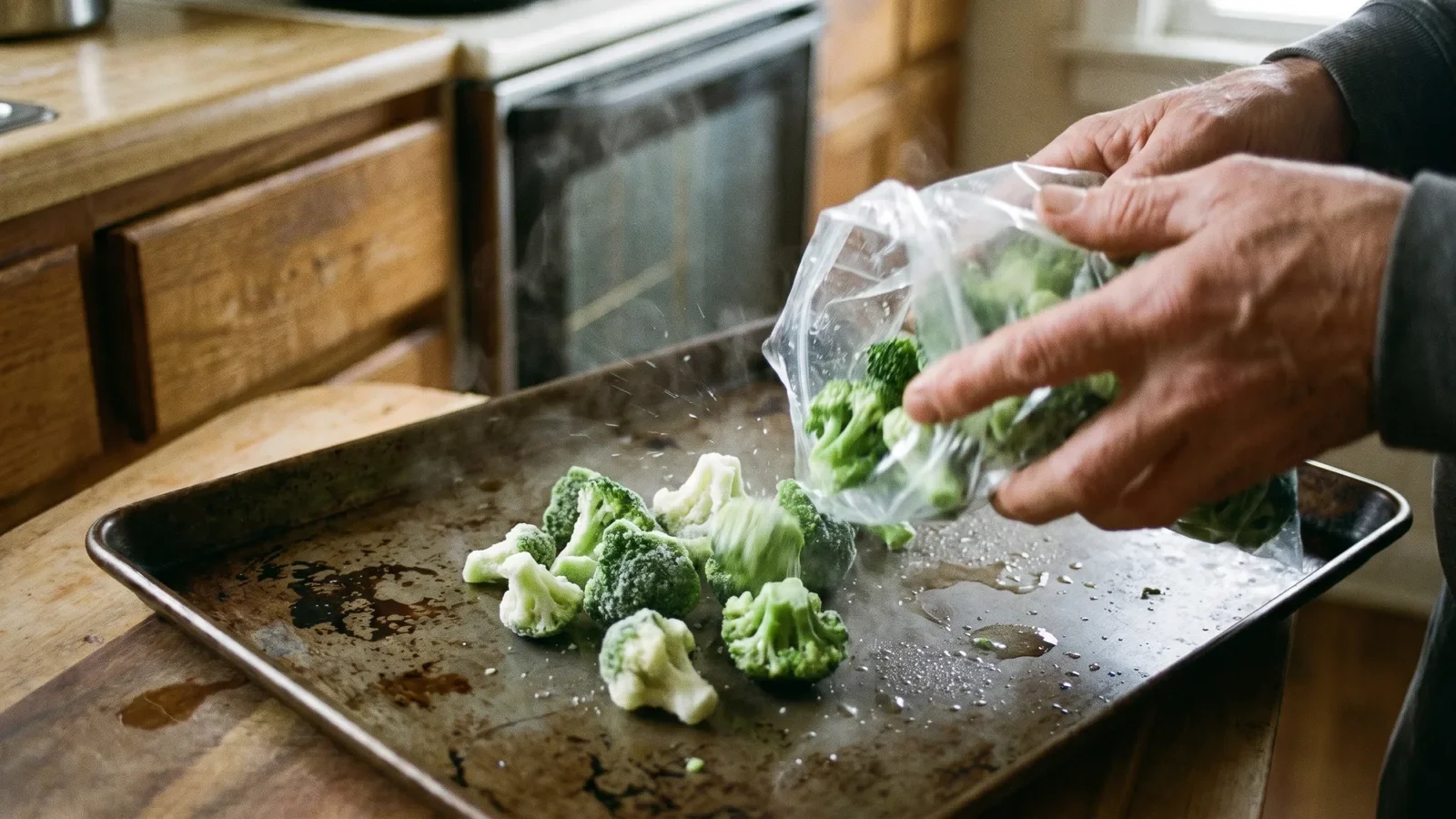
Thawing creates the exact puddle you are trying to avoid. A defrosted floret sits in released liquid, its surface slick, and that liquid has to boil away before any browning starts. A still-frozen floret hitting a 450°F sheet pan sheds its surface ice as steam within the first minute or two, then starts to color.
Skip the sink, too. Running cold water over the bag adds moisture rather than removing it, and it softens the florets before they ever see heat.
A peer-reviewed study of frozen broccoli florets published in PMC found that refrigerator and air defrosting preserved glucosinolates better than water defrosting, with refrigerator defrosting best for vitamin C. That finding concerns nutrient retention in florets you have chosen to defrost — it is not a texture recommendation. If your goal is crisp-tender broccoli rather than a thawed ingredient for a casserole, go freezer to hot pan with no stop in between.
The only exception is a dish where the broccoli gets squeezed dry anyway, such as a filling for a quiche or a dip.
Step 2 — Knock Off Ice and Spread the Florets in a Single Layer
Time: about 2 minutes. What you need: a colander or bowl, a clean kitchen towel, and a half-sheet pan or wide skillet.
Open the bag and shake the florets into a colander, then shake the colander hard over the sink. Loose frost and ice shards fall through. If the pieces have a thick glaze of ice welding them together, press a dry towel over them for a few seconds — do not rub, or you will shred the florets.
The National Center for Home Food Preservation instructs that broccoli be split so florets are no more than 1 1/2 inches across before freezing, which caps the piece size in a commercial bag and keeps cooking times short. Do not cut them smaller. Smaller pieces mean more surface area, faster water loss, and softer centers.
The voluntary U.S. Standards for Grades of Frozen Broccoli from USDA’s Agricultural Marketing Service define cut styles such as spears, cuts and chopped, and carry an effective date of January 22, 1980. Spears and cuts hold their shape best in dry heat; chopped broccoli is better suited to soups and fillings.
Spread the florets so no two pieces touch. Crowding is the single most common reason home-roasted broccoli steams instead of browning.
Kansas State University Research and Extension, drawing on USDA materials, tells home cooks to keep the freezer at 0°F or lower — a freezer that drifts warmer builds heavy ice glaze on the florets, and that glaze is extra water you have to cook off.
Step 3 — Use High, Dry Heat: Oven, Skillet, or Air Fryer
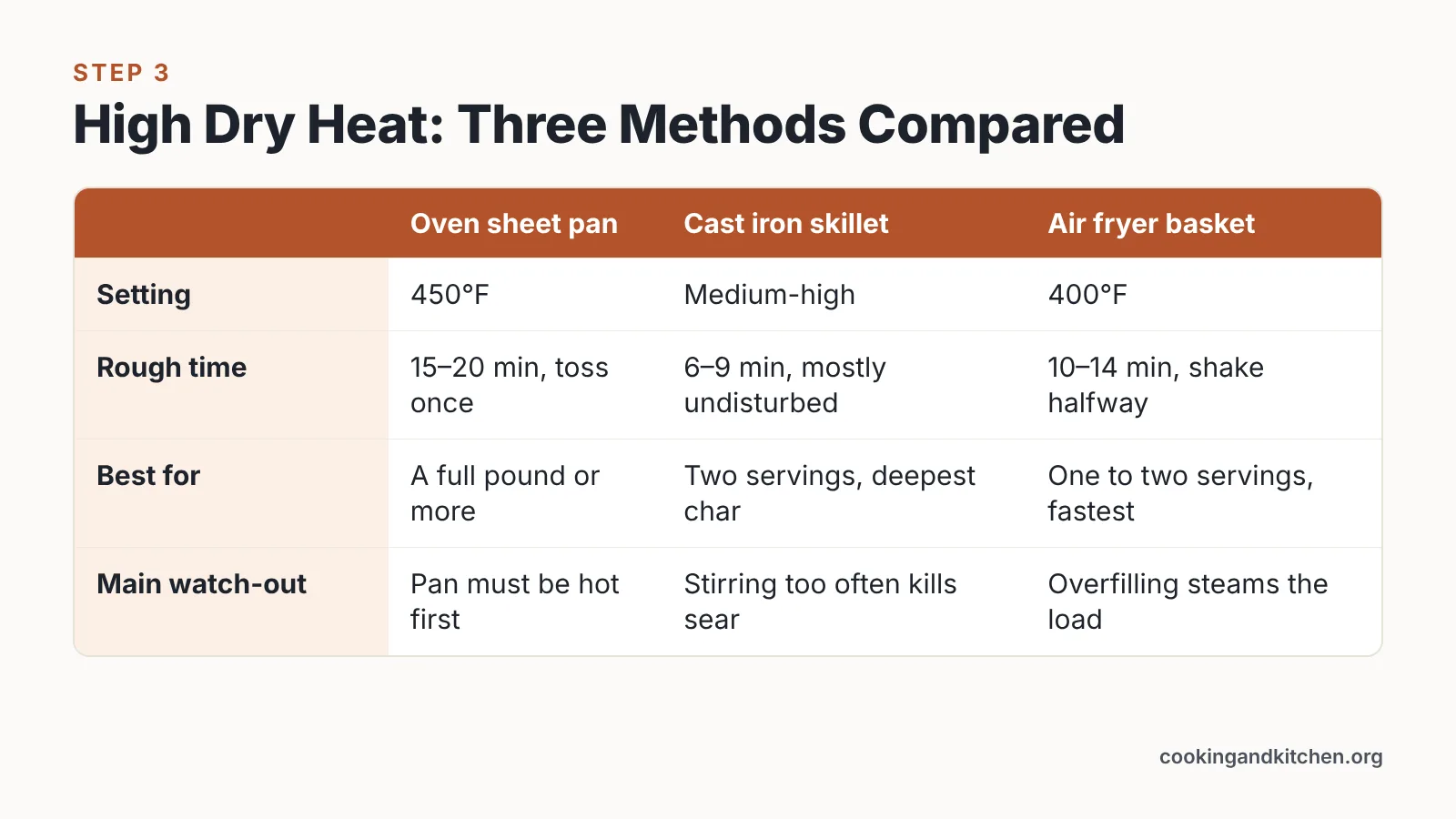
Three pieces of equipment get you there. Choose based on volume and how much browning you want.
| Method | Setting | Rough time | Best for | Main watch-out |
|---|---|---|---|---|
| Oven, preheated sheet pan | 450°F | 15–20 min, toss once | A full pound or more | Pan must be hot before the broccoli lands |
| Cast iron or carbon steel skillet | Medium-high | 6–9 min, mostly undisturbed | Two servings, deepest char | Stirring too often kills the sear |
| Air fryer basket | 400°F | 10–14 min, shake halfway | One to two servings, fastest | Overfilling the basket steams the load |
Preheat the pan empty, then add the oil, then the broccoli. A tablespoon of a neutral high-heat oil per pound is enough to carry heat into the florets without pooling.
Leave the lid off and the oven door closed. Covering the pan traps the steam you worked to release in Step 2, and the browning stops immediately.
In a skillet, let the florets sit untouched for the first few minutes so the cut faces make contact and darken. Toss once, then leave them alone again. In the oven, a single toss partway through is plenty — stirring every five minutes cools the pan and lengthens the cook.
Step 4 — Pull It at Crisp-Tender and Season at the End
Time: the last 60 seconds of cooking. What you need: tongs, salt, and something acidic.
Judge doneness by three signals, not by the clock. The floret tops should show brown or near-black freckles, the color should stay deep green rather than drifting toward army green, and the thickest stem should give under a fork with a little resistance left. Once the green dulls, the texture is already gone.
Taste one floret before you pull the pan. Carryover heat keeps working for a minute after the broccoli leaves the oven, so stop slightly early.
Salt at the end, not the beginning. Salt draws moisture to the surface, and moisture on the surface during cooking means steam instead of browning. Toss the hot florets with salt, a squeeze of lemon, black pepper, and grated hard cheese once they are off the heat.
Delicate aromatics go in late. Minced garlic, red pepper flakes, and lemon zest burn at roasting temperatures, so add them to the skillet during the final minute or stir them in off the heat.
Quick Checklist: Non-Mushy Frozen Broccoli Every Time
Run this list before the pan goes in:
- Broccoli stays in the freezer until the pan is hot.
- Loose ice shaken off in a colander; heavy glaze blotted with a dry towel.
- Florets left at their packaged size, not cut smaller.
- Pan preheated — oven sheet pan included.
- Florets in one layer with visible gaps between pieces.
- One tablespoon of neutral high-heat oil per pound, tossed to coat.
- No lid, no foil, no covered bowl.
- One toss partway through, not constant stirring.
- Pulled when edges are freckled brown and stems still have bite.
- Salt, acid, and cheese added after the broccoli leaves the heat.
Frozen broccoli earns its place on this list partly on cost. USDA’s Economic Research Service estimated that U.S. retail vegetable prices in 2022 ranged from 22 cents to $2.62 per cup equivalent across fresh and processed forms, including frozen.
Keep a second sheet pan ready if you are cooking more than a pound. Two pans with space beat one crowded pan every time, and the oven handles both on separate racks.
Common Mistakes That Turn Frozen Broccoli to Mush
The failure that ruins the most dinners is the pre-microwave. Cooks tip the frozen florets into a covered bowl, run the microwave until the broccoli is soft and sitting in liquid, then transfer it to a hot oven hoping for roasted edges. By then the cell walls have given up, and roasting only dries out a vegetable that is already collapsed. Avoid it by treating the oven, skillet, or air fryer as the only cooking step.
Other reliable ways to end up with mush:
- Dumping the florets onto a cold sheet pan and letting them thaw as the oven heats.
- Filling the pan edge to edge so the pieces touch and trap steam.
- Roasting at 350°F, which cooks the broccoli through before any surface browning starts.
- Salting at the start of cooking.
- Covering the pan or basket to "speed things up."
Storage matters before you ever cook. USDA’s commodity specification requires frozen vegetables to be held, tendered and transported at 0°F or lower, and a bag that feels like one solid brick instead of loose rattling pieces has likely warmed and refrozen somewhere along the way. That bag will release far more water in the pan, so expect softer results no matter how hot your oven runs.
Frequently asked questions
Should I thaw frozen broccoli before cooking it?
No, not for roasting, searing, or air frying. Thawed florets sit in released liquid that must boil off before browning can start, which guarantees a soft texture. Cook straight from the freezer onto a preheated pan.
Why is frozen broccoli already soft compared with fresh?
It was cooked once before freezing. The National Center for Home Food Preservation at the University of Georgia calls for blanching broccoli 3 minutes in boiling water or 5 minutes in steam before it goes into the freezer, so your cooking is a finishing step.
What temperature should I roast frozen broccoli at?
Set the oven to 450°F and preheat the sheet pan inside it, then roast 15 to 20 minutes with one toss partway through. Lower temperatures such as 350°F cook the florets through before the surfaces ever brown.
Can I boil or steam frozen broccoli and still get good texture?
Boiling and steaming both surround the florets with water or steam, so the already-blanched pieces soften fast. If you must use them, pull the broccoli while the stems still resist a fork and drain it immediately, then dress it with oil, salt, and lemon.
Does frozen broccoli lose nutrients compared with fresh?
A peer-reviewed study of frozen broccoli florets published in PMC found that refrigerator and air defrosting preserved glucosinolates better than water defrosting, with refrigerator defrosting best for vitamin C. How you handle and cook the florets matters more than the freezing itself.
Sources
- Freezing Broccoli — National Center for Home Food Preservation (University of Georgia)
- Commodity Specification for Frozen Vegetables, March 2022 — USDA Agricultural Marketing Service
- MF3130 Safe Food Storage: The Refrigerator and Freezer — Kansas State University Research and Extension
- United States Standards for Grades of Frozen Broccoli — USDA Agricultural Marketing Service
- Nutrition Facts for Broccoli, frozen, chopped, unprepared (USDA Food Data Central data) — MyFoodData
- Vegetable prices ranged from 22 cents to $2.62 per cup equivalent in 2022 — USDA Economic Research Service
- Main Health-Promoting Compounds Response to Long-Term Freezer Storage and Different Thawing Methods in Frozen Broccoli Florets — PMC
AI tools helped write this guide. The Cooking and Kitchen Editorial Team published it after checking every figure against the sources linked above.
Related articles

Cooking and Kitchen Editorial Team
Articles on Cooking and Kitchen are written by the editorial team with AI assistance and checked against the cited sources.


You May Also Like
How to Cook Oyster Mushrooms So They Crisp, Not Steam
How to Cook Bone Marrow at Home, Roasted and Served