How to Upgrade Your Kitchen Appliances, Ranked
The short answer on how to upgrade your kitchen appliances: start with an induction cooktop, an ENERGY STAR dishwasher and refrigerator, then a one-second instant-read thermometer, a countertop convection oven, and a hood that vents outside.

How we compared
Six upgrades, one scoring sheet. Each was judged on the same five axes rather than on finish, brand or showroom appeal.
- Daily impact — how often it changes what you cook, or how the food turns out
- Running cost — energy and water, using published figures instead of guesses
- Install burden — plug it in, swap it in place, or call an electrician
- Space and noise — what it costs you in counter space and kitchen quiet
- Upkeep — filters, gaskets, cleaning, and how long the thing should last
| Upgrade | What changes daily | Install burden | Published running-cost evidence | Who it suits |
|---|---|---|---|---|
| Induction cooktop or range | Boil and sear speed, heat control | 240-volt circuit, often an electrician | ENERGY STAR: ~85% of energy into the pan | Everyday stovetop cooks |
| ENERGY STAR dishwasher | Cleanup time, water use | Swap into existing plumbing | ENERGY STAR: about $50 a year to run | Households washing daily |
| ENERGY STAR refrigerator | Food storage, constant power draw | Measure doorway, plug in | ENERGY STAR: about $150 saved over 12 years | Anyone with an aging fridge |
| Thermapen ONE thermometer | Doneness of meat, bread, oil | None, it is handheld | ThermoWorks: one-second readings, ±0.5°F | Cooks who guess at doneness |
| Countertop convection and air-fry oven | Reheats, small roasts, crisping | Plug into a counter outlet | No published figure | One- and two-person kitchens |
| Vented range hood | Grease, steam, lingering smells | Ducting, sometimes structural work | No published figure | Gas cooks and small kitchens |
What was checked: manufacturer specification pages, ENERGY STAR product and program documents, and USDA Food Safety and Inspection Service guidance on safe internal temperatures.
What was not checked: nothing here was handled, measured or cooked on for this article. No noise readings, no side-by-side bake comparisons, no installation quotes, and no local electricity or water rates, which swing results more than any spec sheet does.
Purchase prices move constantly by region and retailer, so the money figures below are published annual running costs and lifetime savings — comparable appliance to appliance, per year.
1. Induction cooktop or range
Nothing else in the kitchen changes your timing this much. ENERGY STAR reports that induction transfers about 85% of heating energy into the cookware, versus only about a third for gas cooking.
Speed is the part cooks notice first. The EPA says induction is the fastest cooking technology and can boil water in as little as 2 minutes.
Efficiency shows up on the bill as well: ENERGY STAR states that certified electric cooking products are 18% more efficient on average than standard electric models.
Before shopping, run a magnet along the bottom of your pans. If it grips hard, that pan will work; if it slides off, thin aluminum and most copper will not heat at all. A full range usually needs a dedicated 240-volt circuit, and that wiring is where the real cost often hides.
A single-burner portable unit is the cheap way to find out whether you like the control. Expect a short learning curve, because the surface responds instantly and sauces catch up with you fast.
Best for: cooks who sear, sauté and boil most days and want repeatable heat levels.
Skip it if: your cookware is all copper or thin aluminum and your electrical panel has no room for a new 240-volt circuit.
2. ENERGY STAR certified dishwasher
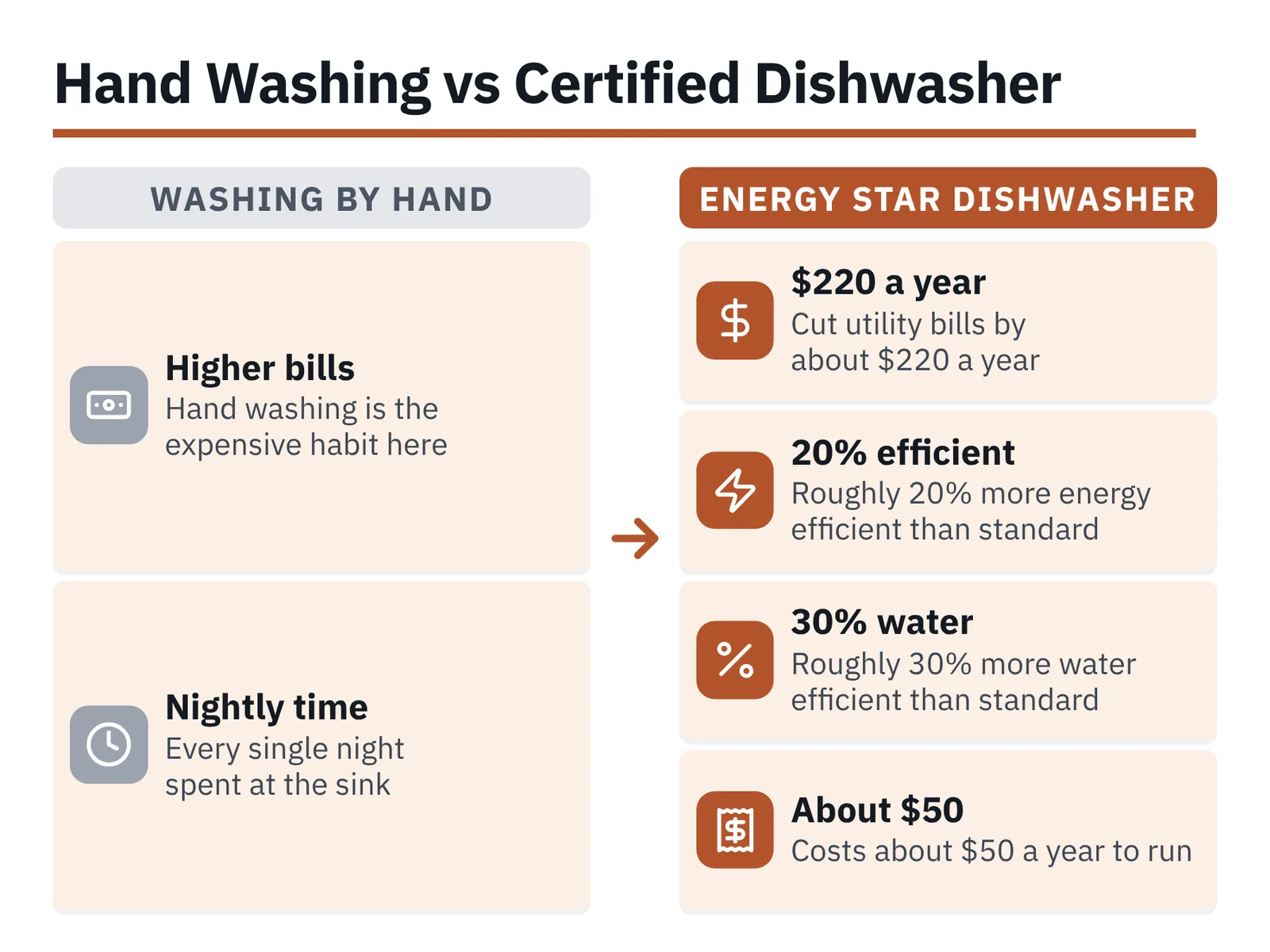
The dishwasher is the upgrade that buys back time every single night. ENERGY STAR reports that standard-size certified dishwashers are roughly 20% more energy efficient and 30% more water efficient than standard models.
Running cost is modest and published: a certified standard-size dishwasher costs about $50 a year to run and saves roughly 5,800 gallons of water over its lifetime, according to ENERGY STAR.
Hand washing is the expensive habit here. ENERGY STAR reports that using a new ENERGY STAR certified dishwasher instead of washing by hand can cut utility bills by about $220 a year.
Installation is usually the easiest of the big three, since the water line, drain and outlet already exist in the same cabinet bay. Look for a third rack for utensils, a soil sensor that adjusts the cycle, and a stainless tub that dries better.
Maintenance is one job: pull and rinse the filter monthly, and stop pre-rinsing dishes, which confuses soil sensors.
Best for: households running a load most days.
Skip it if: you are renting with no existing hookup and cannot modify the plumbing.
3. ENERGY STAR certified refrigerator
Your refrigerator is the only appliance that never switches off, so small efficiency differences compound for years. ENERGY STAR states that certified refrigerators are about 9 percent more energy efficient than models meeting the federal minimum standard.
Retiring the old unit matters as much as buying the new one. According to ENERGY STAR, recycling an old fridge and replacing it with an ENERGY STAR certified model saves about $150 over the product’s 12-year lifetime.
That figure assumes the old one leaves. Moving it to the garage as a second drinks fridge quietly cancels the savings, since you are now powering two compressors instead of one.
Measure before you fall in love with a model. Check the doorway, the hinge swing, and the clearance above for the door to open fully; counter-depth models look built in but give up usable shelf depth.
If your current fridge is only a few years old and holding steady temperatures, test the door gasket with a slip of paper before replacing anything — a worn seal is a far cheaper fix.
Best for: anyone whose fridge predates their current kitchen.
Skip it if: your unit is recent, quiet and keeping food at a steady temperature.
4. ThermoWorks Thermapen ONE instant-read thermometer
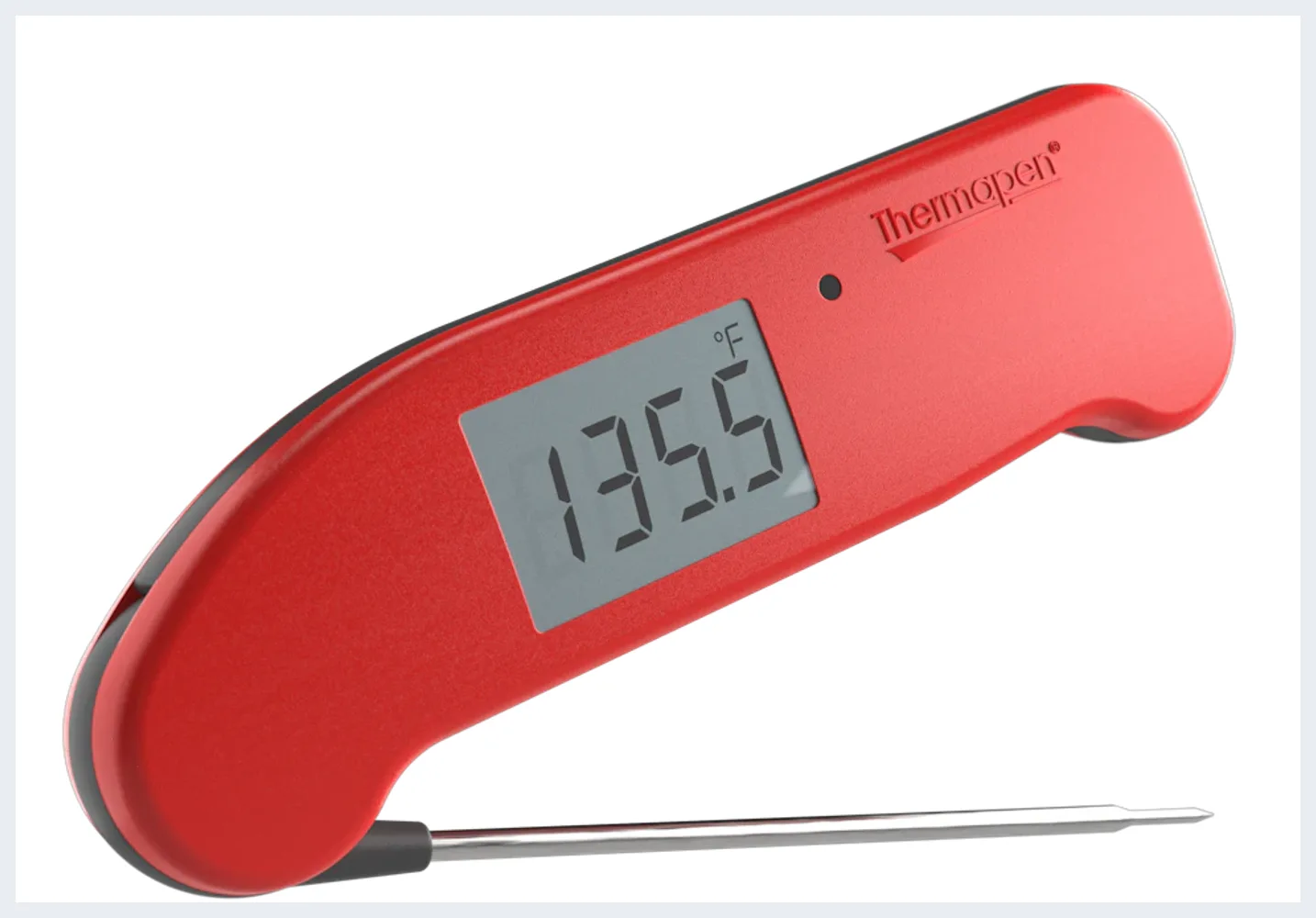
This is the smallest upgrade on the list and the one that changes dinner tonight. ThermoWorks states that the Thermapen ONE gives full readings in one second with ±0.5°F accuracy.
Speed matters because a slow thermometer keeps the oven door open while the reading crawls. One second means you probe, read, and close.
Safety is the other half. USDA FSIS says poultry must reach a minimum internal temperature of 165°F (74°C), measured with a food thermometer — not judged by juices or color.
Use it on the thickest part of the meat, away from bone, and take a second reading somewhere else to confirm. It also reads bread, custards and frying oil, which is where most cooks quietly go wrong.
Thick cuts benefit most, since a fast read is what makes a low-temperature roast and final sear on a tomahawk steak land where you wanted it.
Best for: anyone still cutting into chicken to check if it is done.
Skip it if: what you actually need is a leave-in probe that monitors a brisket for eight hours — that is a different tool.
5. Countertop convection and air-fry oven
A countertop convection oven is a second oven that reaches temperature in a fraction of the time the wall oven takes. For one or two people, it handles most weeknight cooking without heating the whole kitchen.
The fan is the point. Moving air browns the outside of food faster, which is why these units crisp things a microwave turns soggy — including frozen broccoli that would otherwise steam into mush.
Check the interior against a quarter sheet pan before buying, and bring the pan to the store if you can. Racks that only fit the maker’s own tray limit you later.
Summer is when the value shows: roasting a chicken thigh tray without turning on a 30-inch oven keeps the room livable. Cleaning is a weekly job — pull the crumb tray, wipe the glass, degrease the rack.
Best for: small households, reheats, crisping, and anyone whose main oven preheats slowly.
Skip it if: you cook for five or more at a time, or your counter space is already spoken for.
6. Vented range hood
Ventilation is the upgrade nobody photographs and everybody notices the morning after. A hood that ducts outside removes grease, steam, smoke and cooking odors instead of pushing them around the room.
Recirculating hoods only filter air through charcoal and send it back into the kitchen. They are a fallback, not an equal option.
Sizing rules are simple. Choose a hood at least as wide as the cooktop, deep enough to cover the front burners, and mounted at the height the manufacturer specifies — too high and the capture area misses the plume entirely.
Gas burners add combustion byproducts to the indoor air, which is one more reason the induction option at the top of this list and a good hood often get bought together.
Habit matters as much as hardware: switch the fan on before the pan gets hot and leave it running a few minutes after you plate. Most baffle filters go straight into the dishwasher.
Best for: gas cooks, open-plan kitchens, and anyone who sears or fries weekly.
Skip it if: you live in an apartment with no exterior duct path — then choose a recirculating hood with carbon filters you actually replace on schedule.
Which one fits you
Match the upgrade to the problem you have, not to the one in the showroom.
| If this sounds like you | Then start here |
|---|---|
| You cook on the stovetop most nights and own magnetic pans | Induction cooktop or range |
| You wash dishes by hand or run a 15-year-old machine | ENERGY STAR certified dishwasher |
| Your fridge runs constantly and predates your kitchen | ENERGY STAR certified refrigerator |
| You cut into chicken to check doneness | Thermapen ONE instant-read thermometer |
| You cook for one or two and dread preheating | Countertop convection and air-fry oven |
| The kitchen still smells like dinner at breakfast | Vented range hood |
Spend in that order of certainty. The thermometer costs the least and changes results immediately; the big appliances are worth replacing when the current one fails or when published running-cost savings, like the $220 a year ENERGY STAR cites for dishwasher use over hand washing, apply to your household.
Accuracy tools beat appliances for the money. If baking is where things go sideways, weighing flour instead of scooping it fixes more problems than a new oven will.
If the appliances work fine and the room simply looks dated, spend the budget on surfaces instead — bringing oak cabinets up to date changes the kitchen you see without touching the one you cook in.
Frequently asked questions
Which kitchen appliance upgrade should I buy first?
Buy the instant-read thermometer first, because it costs the least and improves results the same night. ThermoWorks states the Thermapen ONE reads in one second with ±0.5°F accuracy, which covers poultry, roasts, bread and frying oil.
Do I need all new cookware for an induction cooktop?
Only pans with magnetic bases work, so test each pot with a refrigerator magnet before shopping. Cast iron, carbon steel and most stainless pass; thin aluminum, copper and glass do not and will sit cold on the surface.
Is running a dishwasher really cheaper than washing by hand?
Yes, according to ENERGY STAR, which reports that using a new ENERGY STAR certified dishwasher instead of washing by hand can cut utility bills by about $220 a year. The same program puts annual running cost at about $50.
How much does an ENERGY STAR refrigerator actually save?
ENERGY STAR states that certified refrigerators are about 9 percent more energy efficient than models meeting the federal minimum standard, and that recycling an old fridge and replacing it with a certified model saves about $150 over the product’s 12-year lifetime.
Is a recirculating range hood good enough?
A recirculating hood filters grease and some odor through charcoal, then returns the air to your kitchen, so moisture and combustion byproducts stay indoors. Duct outside whenever the building allows it; if not, replace carbon filters on the maker’s schedule and crack a window while cooking.
Sources
AI tools helped write this guide. The Cooking and Kitchen Editorial Team published it after checking every figure against the sources linked above.
Related articles

Cooking and Kitchen Editorial Team
Articles on Cooking and Kitchen are written by the editorial team with AI assistance and checked against the cited sources.


You May Also Like

How to Make Oak Kitchen Cabinets Look Modern

How to Use a Kitchen Scale for Accurate Baking