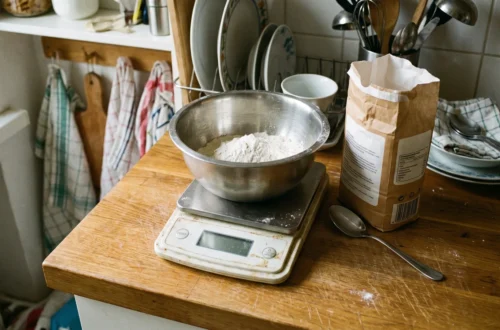
What Is Mise en Place? A Home Cook’s Guide
What is mise en place? It’s the kitchen habit of reading a recipe all the way through, then measuring, cutting and staging every ingredient and tool before you turn on a burner.
What Is Mise en Place? The One-Sentence Definition
Quick definition: Mise en place is French for "a putting in place" — measuring, cutting and staging every ingredient and tool before a burner is ever lit.
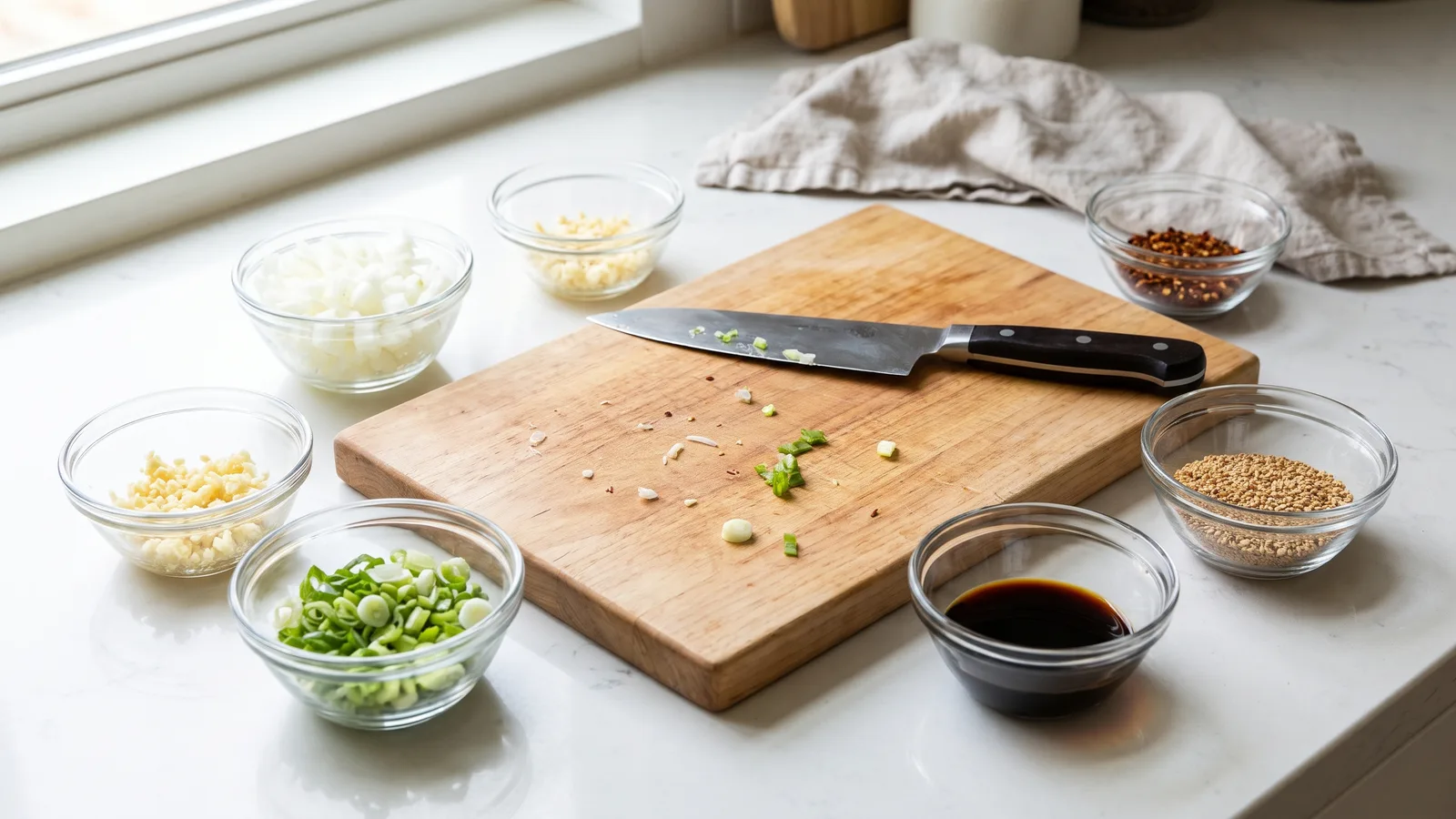
Merriam-Webster defines mise en place as a culinary process in which ingredients are prepared and organized before cooking, and also as the set of prepared ingredients themselves. Both halves matter at home. The small bowl of minced garlic is mise en place, and so are the eight minutes you spent getting it there.
Cooks who skip it usually pay later. You notice the missing shallot when the pan is already smoking, or you measure cornstarch with one hand while a sauce breaks under the other.
What counts as mise en place in a home kitchen:
- Ingredients measured, peeled, chopped and portioned into bowls, ramekins or deli cups
- Tools staged within arm’s reach: tongs, spider, microplane, instant-read thermometer
- Pans, sheet trays and plates chosen; oven preheated; grill lit
- A towel, a trash bowl and hot soapy water ready for cleaning as you go
- The recipe read end to end, with timing clashes marked before you start
Where the Term Came From (and Why Restaurant Kitchens Live By It)
Merriam-Webster dates the first known English use of the term "mise en place" to 1876. Dictionary.com records the phrase as first used in 1860–65 and translates it literally from French as "a putting in place." The wording is old; the problem it solves is older.
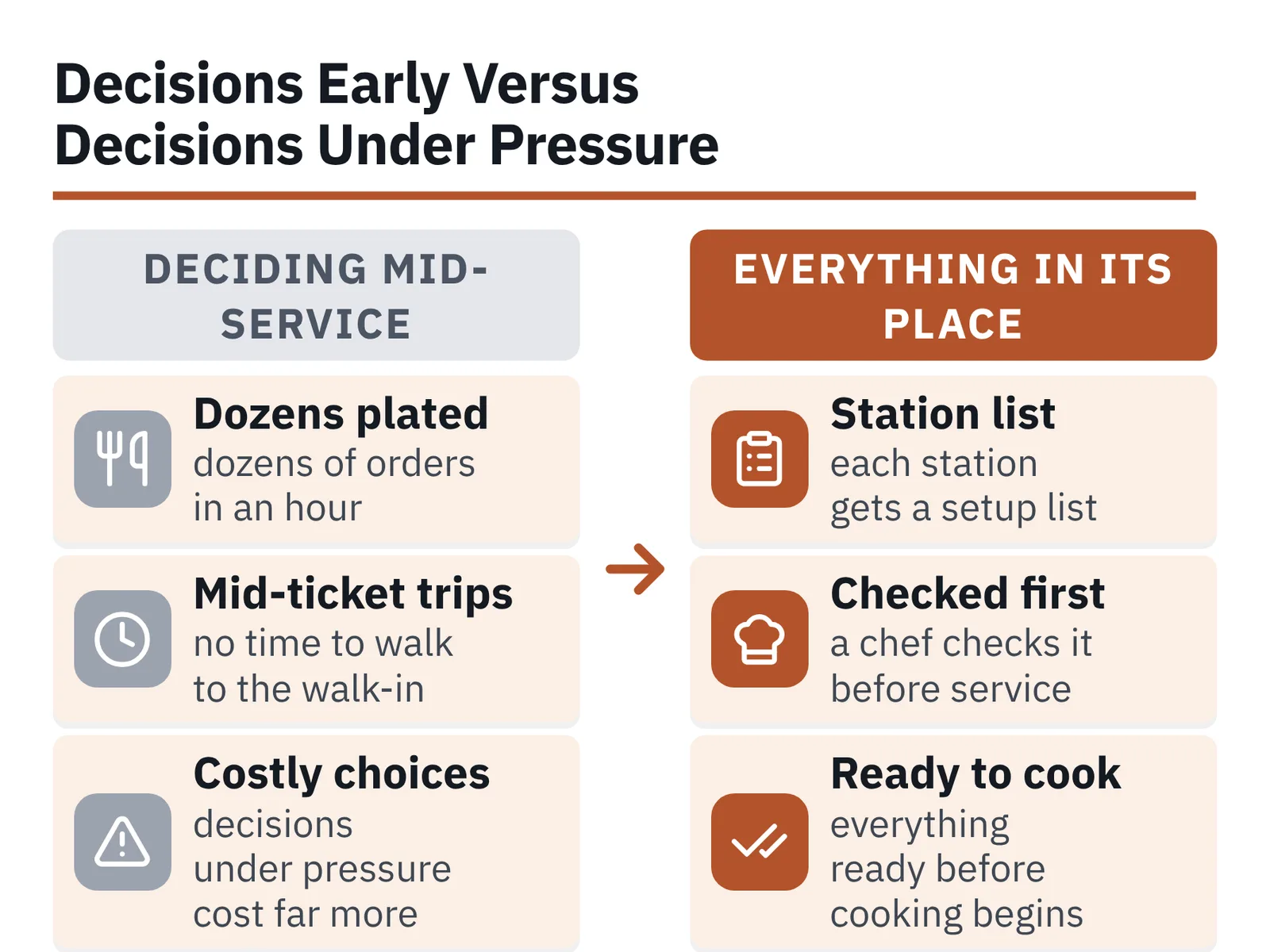
Culinary Arts Academy Switzerland traces the practice to French culinary schools and professional kitchens of the late 19th century, where it meant "everything in its place." Brigade kitchens ran on it because a line cook may plate dozens of orders in an hour. There is no time to walk to the walk-in mid-ticket.
Culinary educators at Escoffier describe mise en place as preparing ingredients and organizing the workspace so everything is ready before cooking begins. Restaurants formalize that: each station gets a setup list, and a chef checks it before service. Home cooks rarely need that much structure, though the logic carries over — decisions made early cost far less than decisions made under pressure.
How Mise en Place Works: Read, Prep, Arrange
Three moves, in order.
1. Read
Read the whole recipe before you touch a knife. Mark the steps that overlap — a sauce that simmers 20 minutes while pasta boils 9 — and note anything that needs resting, soaking or softening. Dried beans and room-temperature butter are the two that most often sink a weeknight plan.
2. Prep
Do all the cutting and measuring in one pass, grouped by tool rather than by recipe order. Everything that needs the box grater gets grated, then the knife work, then the liquids. Weighing beats packing cups for flour, sugar and ground spices, and a kitchen scale earns its counter space in baking.
3. Arrange
Line the bowls up in the order they go into the pan, left to right. Put whatever you need in the first 60 seconds closest to the stove. Salt, pepper, oil and a spoon rest belong within reach of your dominant hand.
Mise en Place vs. Meal Prep: What’s Actually Different
Both involve chopping ahead. They answer different questions.
| Mise en place | Meal prep | |
|---|---|---|
| Time horizon | Minutes to hours before one meal | Days ahead, for several meals |
| Output | Staged components for one recipe | Finished or near-finished portions |
| Storage | Bowls on the counter or a tray in the fridge | Sealed containers, fridge or freezer |
| Goal | Cook that dish without stalling | Skip cooking on a busy night |
| Typical scale | One dinner | A week of lunches |
Mise en place is a technique inside a single cooking session; meal prep is a schedule across a week. They stack well, since batch cooking runs smoother when each recipe’s components are staged first, and a week of make-ahead meals that still tastes good on Friday leans on the same discipline.
Treating them as identical causes trouble in one direction. Ingredients cut for mise en place are not built to sit for three days in a container: sliced mushrooms weep, cut herbs bruise, and garlic minced on Sunday tastes harsh by Wednesday.
How Home Cooks Use Mise en Place on a Weeknight
In 2024, Americans spent an annual average of 0.67 hours per day on food preparation and cleanup, according to the Bureau of Labor Statistics’ American Time Use Survey. That is a tight budget. Full restaurant-style staging, with every spice in its own ramekin, spends more of it than most Tuesdays can spare.
Scale it down. Use one small bowl per cooking stage instead of per ingredient: aromatics together, the spice blend premixed in a single cup, sauce ingredients whisked in a measuring jug.
Example: a weeknight stir-fry. Sliced protein marinating in one bowl; garlic, ginger and scallion whites in a second; sauce whisked in a jug; broccoli on a plate; scallion greens and sesame seeds in a last dish. Five vessels, and the cooking itself runs about six minutes with no pauses.
Dishes that hinge on timing repay the setup most — risotto, stir-fries, pan sauces, anything with an emulsion. Braises and slow roasts need much less staging, because the pot gives you minutes of slack at every step.
Food Safety: Keeping Your Prepped Ingredients Out of the Danger Zone
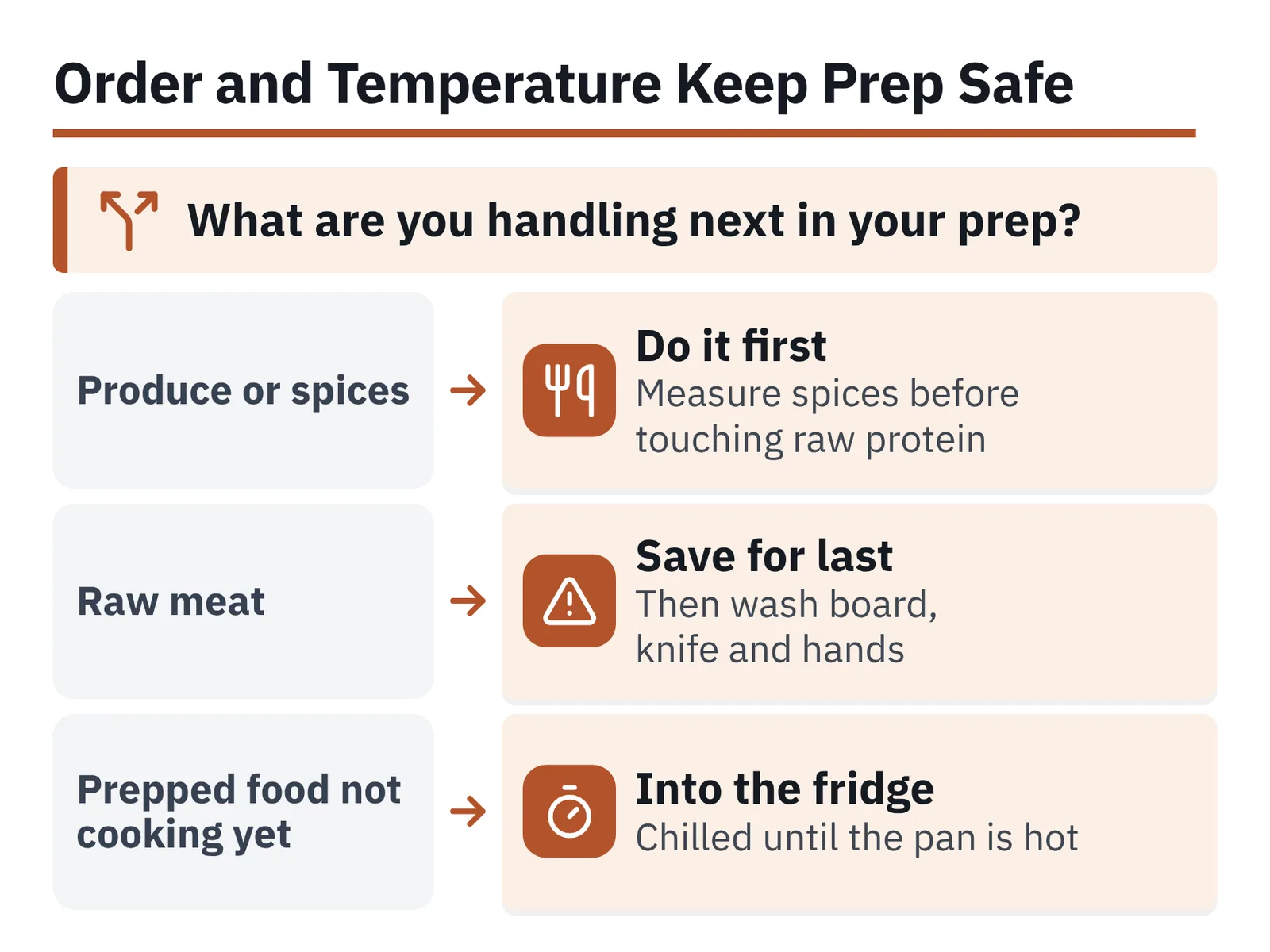
Staged food is still food, and your counter is not a holding cabinet. USDA’s Food Safety and Inspection Service warns that perishable foods should not sit out for more than two hours. Bacteria grow fastest between 40 degrees F and 140 degrees F, the range UF/IFAS Extension calls the Danger Zone, so prepped meat, dairy and cooked grains belong in the fridge until the pan is hot.
Prep order matters as much as temperature. Cut produce first and raw meat last, then wash the board, the knife and your hands before touching anything else.
In a USDA-funded consumer kitchen study published in the Journal of Food Protection, 48% of spice container samples showed cross-contamination, while most other surfaces stayed at or below 20% positivity. That study observed 371 consumers preparing a meal with turkey patties spiked with the bacteriophage MS2 as a tracer organism. Measuring your spices into a bowl before you handle raw protein keeps your hands off those jars entirely — an argument for mise en place that has nothing to do with speed.
The Gear: Bowls, Boards, Trays and Smart Workspace Setup
None of this is specialized equipment.
- Small bowls, six to ten. Glass prep bowls, ramekins or 4-ounce deli cups with lids. Nesting sets store flat.
- A half sheet pan. It turns loose bowls into one carryable tray that slides straight into the fridge.
- Two cutting boards. One for produce, one for raw protein, so you never stop to wash mid-prep.
- Bench scraper. Moves chopped vegetables into the bowl and clears the board in one motion.
- Trash bowl. Peels and trim land in one place instead of thirty trips to the bin.
Set the board in the middle of your longest clear counter run, bowls behind it, trash bowl at your off hand. Keep the tongs, spoons and knives you actually reach for together rather than buried in a drawer — choosing a utensil set you’ll use daily matters more than the piece count.
Grease travels during prep and cooking. Wiping the backsplash and cabinet fronts while they are still warm beats stripping cooked-on grease off cabinet doors months later.
Common Mise en Place Mistakes — and Easy Fixes
Over-prepping. Thirty bowls for a weeknight soup is theater, not technique. Fix: group by cooking stage, not by ingredient.
Prepping too early. Cut apples brown, salted vegetables weep, minced garlic turns sharp. Fix: handle delicate items last and keep them covered in the fridge until the pan is ready.
Forgetting the tools. Perfectly staged ingredients plus a missing colander still stalls dinner. Fix: stage the strainer, thermometer and serving plates in the same pass.
No landing zone. The skillet comes off the heat and there is nowhere to set it. Fix: clear a trivet-sized space before you start.
Leaving out the finishers. Lemon, herbs, flaky salt and the serving bowl are part of the setup. Fix: park them at the end of the bowl line, where the dish actually ends.
Skipping cleanup as you go. Fix: wash the board and knife while something simmers, and start with a sink of hot soapy water.
Mise en place is a habit, not a ritual. Stage what the dish cannot wait for, and let the rest go.
Frequently asked questions
What does mise en place mean in English?
Dictionary.com translates the French phrase literally as "a putting in place," and the practice is often described in kitchens as "everything in its place." It covers both the act of prepping and the prepped ingredients themselves.
How old is the term mise en place?
Merriam-Webster dates the first known English use of "mise en place" to 1876, while Dictionary.com records the phrase as first used in 1860–65. Culinary Arts Academy Switzerland traces the practice to late-19th-century French culinary schools and professional kitchens.
Is mise en place the same as meal prep?
No. Mise en place stages components for one dish within one cooking session, usually minutes to hours ahead. Meal prep builds finished or near-finished portions days in advance for several meals, stored sealed in the fridge or freezer.
Can I prep ingredients the night before?
Sturdy items like carrots, onions and washed greens hold well overnight in sealed containers. USDA’s Food Safety and Inspection Service warns that perishable foods should not sit out for more than two hours, so refrigerate anything prepped ahead and leave herbs, apples and avocado for cooking time.
How many bowls do I actually need for mise en place?
Six to ten small bowls cover most home recipes if you group by cooking stage rather than by ingredient. Aromatics share one bowl, the spice blend shares a cup, and sauce ingredients go into a single measuring jug.
Sources
- MISE EN PLACE Definition & Meaning – Merriam-Webster
- MISE EN PLACE Definition & Meaning | Dictionary.com
- Understanding mise en place: What is mise en place? — Culinary Arts Academy Switzerland
- What Is Mise en Place and Why Is It So Important to Chefs? – Escoffier
- Table 12. Average hours per day spent in primary activities for the civilian population, 2024 quarterly and annual averages — U.S. Bureau of Labor Statistics
- Keep Food Safe from Kickoff to Leftovers — USDA FSIS
- FOOD SAFETY: The 2-hour rule – UF/IFAS Extension Broward County
- Cross-Contamination to Surfaces in Consumer Kitchens with MS2 as a Tracer Organism in Ground Turkey Patties — Journal of Food Protection
AI tools helped write this guide. The Cooking and Kitchen Editorial Team published it after checking every figure against the sources linked above.
Related articles

Cooking and Kitchen Editorial Team
Articles on Cooking and Kitchen are written by the editorial team with AI assistance and checked against the cited sources.


You May Also Like
How to Cook Oyster Mushrooms So They Crisp, Not Steam
How to Cook Country Style Pork Ribs Tender in the Oven