How to Bake Sweet Potatoes in the Oven, Step by Step
The short answer to how to bake sweet potatoes in the oven: heat it to 400°F and bake them whole and unwrapped until a knife meets no resistance, per the North Carolina SweetPotato Commission.
Quick steps for soft, caramelized sweet potatoes
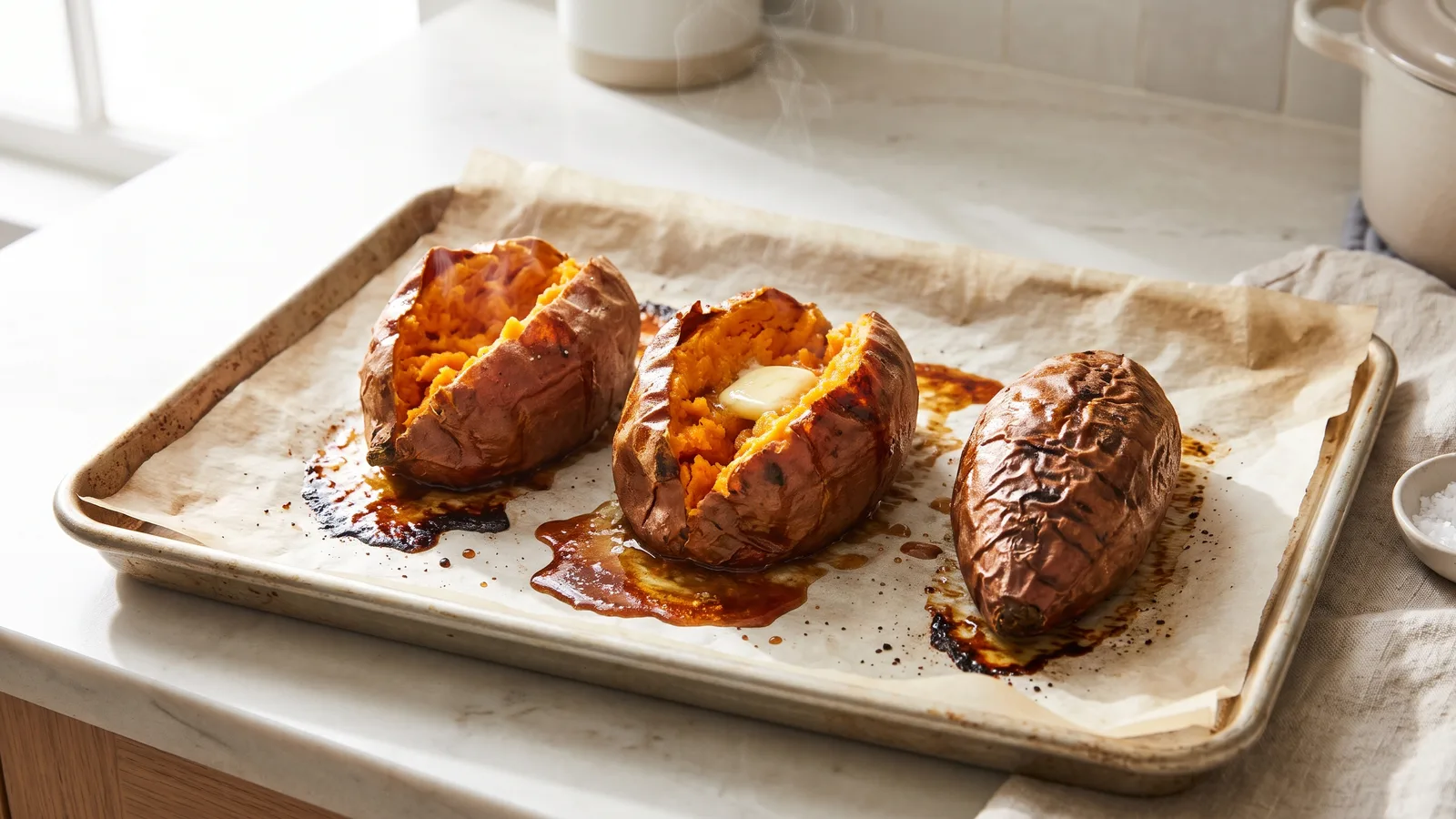
Sweet potatoes do not behave like russets in a hot oven. Their sugars turn liquid, seep through cracks in the skin, and set into a dark syrup on the pan. That leak is the goal, not a mess to prevent.
- Scrub the skins under cold running water, then dry them with a towel.
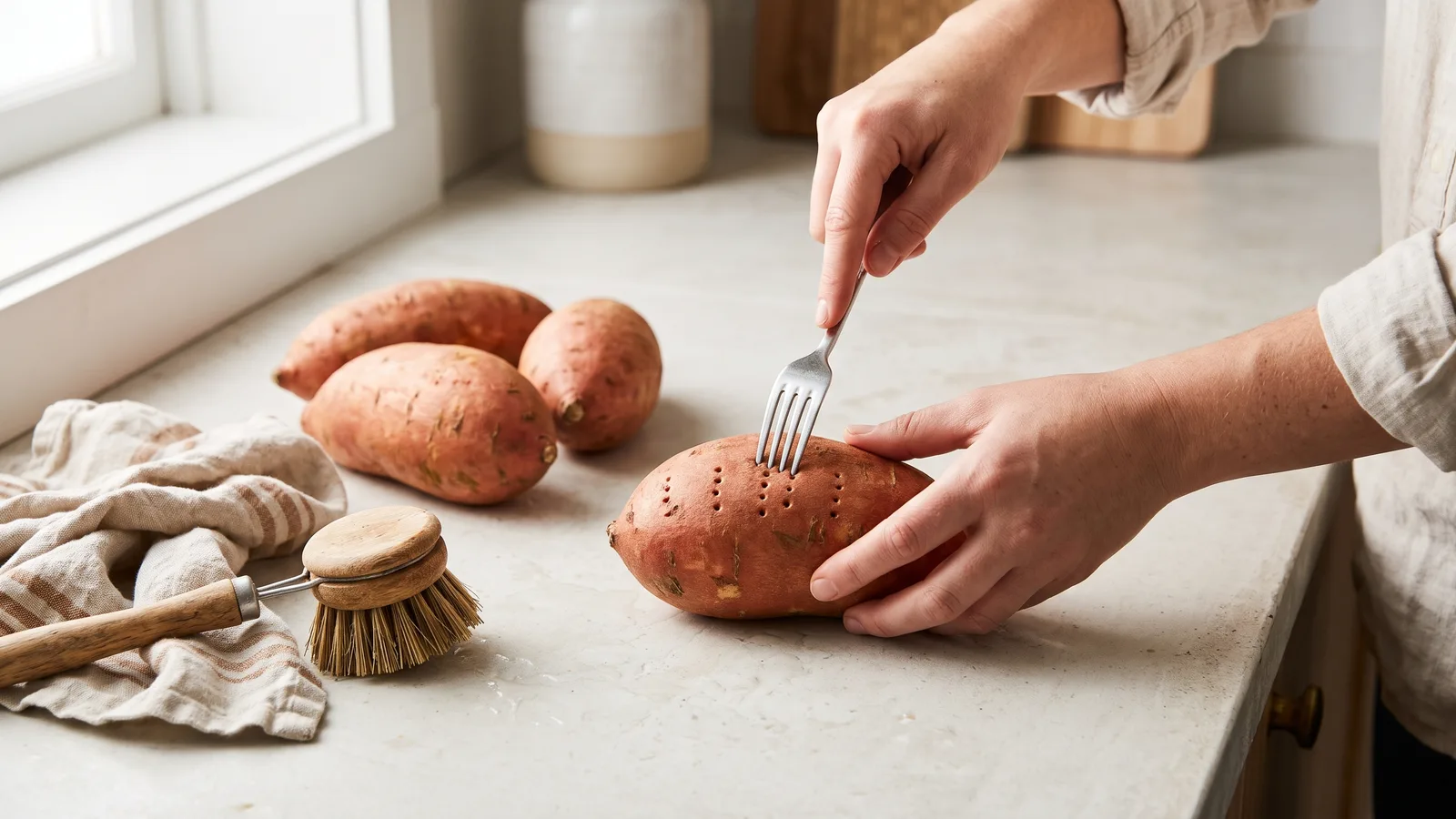
- Pierce each potato several times with a fork so steam has an exit.
- Preheat the oven fully and line a rimmed sheet pan with parchment or foil.
- Bake whole and unwrapped until a knife slides to the center with no resistance.
- Split each one open as soon as it leaves the oven and press the ends toward the middle.
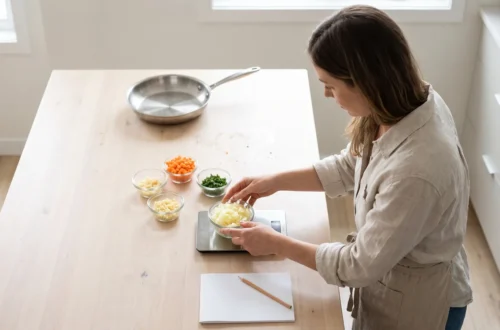
Nothing here calls for special equipment. A rimmed sheet pan, a fork, and a paring knife cover the whole job, which is why this fits a weeknight better than most side dishes. If you tend to start cooking and then hunt for the parchment, the habit described in this guide to setting out ingredients and tools before the heat goes on saves more time than any oven trick.
Two mistakes cost most of the flavor. Wrapping the potato in foil steams it into something pale and watery. Pulling it when a fork merely sinks in leaves the center grainy and only half sweet.
What to decide first: temperature, size, and cut
Three decisions set your timing: whole or cut, how heavy the roots are, and whether you want custardy flesh or crisp edges. Whole and unwrapped gives the syrupy interior most people picture when they think of a baked sweet potato. Cutting trades that for browned surface area and a much shorter bake.
| What you’re baking | Setting | Time | Where the time comes from |
|---|---|---|---|
| Whole sweetpotatoes, unwrapped | 400°F | Bake until tender, knife meeting no resistance | North Carolina SweetPotato Commission (timing in Step 3) |
| 1/4-inch strips (oven fries) | 400°F* | About 30 minutes, flipped halfway, until crisp | North Carolina SweetPotato Commission |
| Halves, cut side down | 400°F* | Shorter than whole — check when edges darken | Article guidance, no sourced figure |
| Very large or thick roots | 400°F | Long end of the whole-potato window | Article guidance, no sourced figure |
*The oven setting in the strips and halves rows is this article’s advice, matched to the whole-potato setting: the commission’s oven-fry instruction gives a time but no oven temperature.
The spread between thin strips and whole roots is the single biggest variable on this page. The thinner you cut, the shorter the bake and the crisper the surface — and the less of that spoonable, syrupy interior you end up with.
Sort by size before anything else. A pan holding one slim root and one fist-thick root will give you one perfect potato and one chalky one, because they finish at different moments. Group similar weights on the same pan, or start the big ones first and add the small ones later.
Step 1 — Choose and prep the potatoes
You need: firm sweet potatoes of roughly equal size, a vegetable brush, a kitchen towel, and a fork. Prep runs about as long as your oven takes to preheat.
Pick roots that feel heavy and solid, with tight skin and no soft patches. Shriveled ends, weeping spots, and sprouting eyes all point to age, and age shows up as stringiness and off flavors once the flesh is hot. Skip the ones with deep cracks; they bake unevenly and dump sugar before the center is done.
Scrub under cold running water with a brush rather than soaking them, since waterlogged skin steams instead of crisping. Dry each one completely. A wet surface going into a hot oven wastes the first several minutes turning water to vapor.
The North Carolina SweetPotato Commission’s method pierces the skin 5 to 6 times with a fork before baking. Those holes let pressure escape so the potato splits where you want it to, not across the oven. Leave the skin on and unpeeled — it holds shape while the inside collapses into something spoonable. A thin film of oil rubbed over the skin plus a pinch of salt makes the jacket worth eating, which is optional but cheap.
Step 2 — Preheat to 400°F and line a rimmed sheet pan
You need: a rimmed sheet pan, parchment or foil as a pan liner, and a fully preheated oven with a rack in the middle.
Wait for the real preheat, not the beep. Many home ovens signal temperature before the walls and the pan have caught up, and a cold start adds minutes you will blame on the potato. Set the rack in the middle so the bottoms do not scorch against radiant heat from the floor element.
The rim matters. Sugar runs out of the splits, hits the hot pan, and hardens into a black lacquer that laughs at a sponge. Parchment under the potatoes catches it; foil works too and peels off with the mess attached. If syrup does hit the oven floor, wipe it while the oven is barely warm, using the approach in this walkthrough of cleaning kitchen appliances without wrecking the finish.
Do not wrap the potatoes themselves. Foil traps steam against the skin and gives you a boiled texture with no browning. Lining the pan is a different thing: the commission’s own method says to place the sweetpotatoes on a baking sheet lined with foil, so a foil-lined pan is part of the recipe, and the no-foil rule applies to what you wrap around the potato, not to what sits under it. University of California Agriculture and Natural Resources warns that foil left on a baked potato can keep it in the temperature danger zone of 40°F to 140°F, where bacteria can grow and germinate, so a wrap is both a flavor problem and a safety one.
Step 3 — Bake 45 minutes to 1 hour, adjusting for weight
You need: a timer, tongs, a thin knife or metal skewer, and space between the potatoes on the pan.
Arrange them with a finger’s width of air on all sides. Crowding traps moisture between the roots, and the sides that touch stay pale and damp while the tops color. Give an overloaded batch two pans rather than one.
Weight drives everything. Slim roots finish toward the early end of the window, thick ones hold out until the late end, and a scale removes the guesswork — if you already use one for bread, the same scale habit that makes baking consistent works here. Rotate the pan once if your oven browns unevenly, which most do.
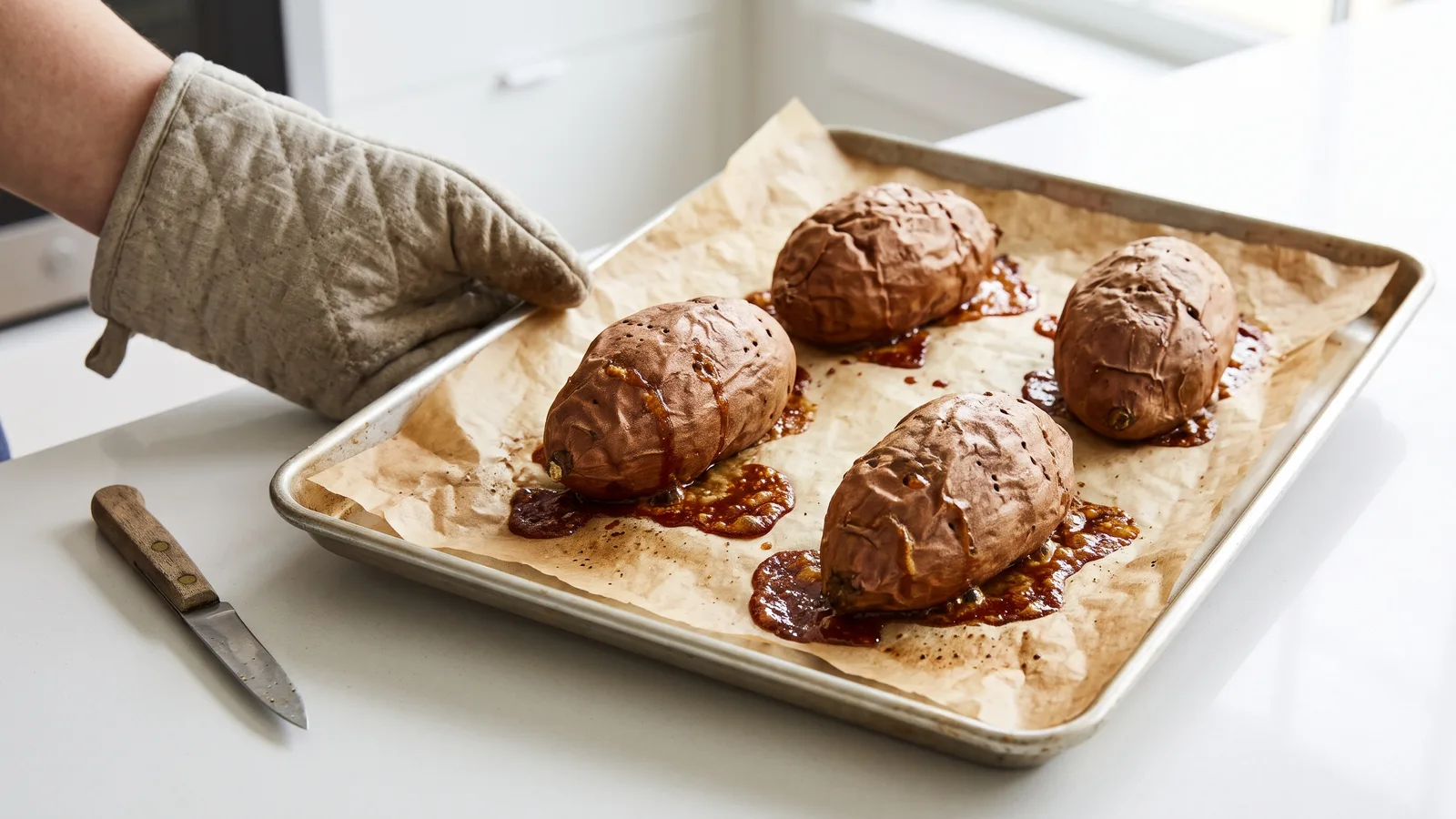
Watch the pan, not the clock, during the final stretch. You are waiting for three signals: skin that puffs and loosens, sides that sag instead of holding a round profile, and amber syrup bubbling out of the fork holes and darkening where it meets the parchment. Potatoes that leak early and then sit a while longer are the sweetest ones. Resist slitting them open to peek, because every early cut vents the steam that is still cooking the core.
Step 4 — Rest, split, and finish for caramelization
You need: an oven mitt, a paring knife, and whatever you plan to finish with — butter, salt, olive oil, lime, yogurt, chili flakes.
Give them a short rest on the pan so the steam inside settles and the flesh firms enough to scoop. Then split each potato lengthwise while it is still very hot. A sweet potato left whole and sealed keeps cooking in its own vapor and turns gluey at the edges.
Push both ends toward the center with your thumbs and the flesh rises out of the jacket in a loose, steaming mound. Fluff it with a fork rather than mashing it flat. Salt goes on now, while the surface is wet enough to grab it.
For more browning, spoon some of the pan syrup back over the open faces and slide the pan under the broiler for a minute or two, watching the whole time — sugar goes from glossy to bitter fast. Hold finished potatoes uncovered rather than tented in foil. Leftovers earn their keep in bowls and hashes, which is why they show up in these make-ahead plans built to survive the whole week.
How to check doneness — and rescue underbaked, dry, or stringy results
Doneness is a thin knife sliding into the thickest part and meeting nothing. Not resistance you can push through — nothing. A fork test is too forgiving, because fork tines will sink into flesh that is still grainy in the middle.
Use these fixes when the result misses:
- Underbaked and grainy: put it straight back on the pan at the same oven setting and check again every several minutes. Splitting it first speeds things up but costs some moisture.
- Dry and mealy: the root was old or the bake ran long and hot. Mash the flesh with butter, olive oil, or a splash of warm milk and serve it as a puree instead.
- Stringy: fibers come from the variety and from storage age, not from your oven. Mash and press the flesh through a sieve, or chop the strings out of the core.
- No sweetness: sweetness partly comes from curing before the root ever reaches your kitchen, and Ask Extension advises holding sweet potatoes at 85 degrees F and 90 percent relative humidity for about four to six days to increase sugar content.
The most common failure is pulling the pan at the first sign of give. The potato looks done, feels soft to a squeeze, and tastes like starch twenty minutes later at the table. Avoid it by committing to the knife test and by accepting that an extra ten minutes in the oven costs you almost nothing, while ten minutes short costs you the whole dish.
Your sweet potato checklist
Run this before, during, and after the bake:
- ☐ Roots sorted so everything on the pan is close to the same size
- ☐ Skins scrubbed and fully dried, not soaked
- ☐ Skin pierced with a fork, 5 to 6 times per potato
- ☐ Oven fully preheated, rack in the middle
- ☐ Rimmed pan lined with parchment or foil, potatoes spaced apart and unwrapped
- ☐ Knife meets no resistance at the thickest point before the pan comes out
- ☐ Potatoes split open immediately and held uncovered, never wrapped in foil to keep warm
- ☐ Leftovers cooled and refrigerated quickly rather than left on the counter
This is general home-cooking and food-safety guidance, not medical advice; follow your local health department if its direction differs.
Frequently asked questions
How should I store raw sweet potatoes before baking?
Keep them in a cool, dark, ventilated spot. Ask Extension’s guidance is explicit that raw sweet potatoes should be stored at 55 to 60 degrees F and never refrigerated, so a pantry shelf, a cupboard away from the stove, or a basement corner suits them better than the crisper drawer.
Is it safe to bake sweet potatoes wrapped in foil?
Wrapping hurts texture and creates a real hazard if the wrapped potato sits out. In April 1994, the largest US botulism outbreak since 1978 occurred in El Paso, Texas, where thirty people were affected and 4 required mechanical ventilation after eating dips made from foil-wrapped baked potatoes held at room temperature, according to the Journal of Infectious Diseases.
How long can baked sweet potatoes sit out before I refrigerate them?
Two hours is the outer limit. Michigan State University Extension’s rule for cooked potatoes is to chill them inside that window, down to 40 degrees Fahrenheit or colder in the fridge, so break the batch into shallow containers and get them in rather than leaving the pan on the stovetop all evening.
How much faster do cut sweet potatoes bake than whole ones?
Much faster. Quarter-inch planks crisp in roughly half an hour under the North Carolina SweetPotato Commission’s oven-fry approach, turned once at the midpoint, while the same commission gives whole roots 45 minutes to 1 hour at 400°F to go tender to the core — so cutting can cut your wait in half or better.
Why did my sweet potato come out soft but not sweet?
Sweetness is largely settled before the root meets your oven. Ask Extension’s curing instructions call for roughly four to six days of warm, very humid holding — 85 degrees F at 90 percent relative humidity — to build sugar in the flesh, so an uncured or freshly dug root tastes starchy however long you bake it.
Sources
- How-To — North Carolina SweetPotato Commission
- Sweet Potatoes in the Kitchen (North Carolina SweetPotato Commission, PDF)
- Preserve It! Series: Remove Foil from Baked Potatoes Immediately for Safety — UC ANR
- Food safety of potatoes — MSU Extension
- A large outbreak of botulism: the hazardous baked potato — J Infect Dis (PubMed)
- Curing sweet potatoes — Ask Extension
AI tools helped write this guide. The Cooking and Kitchen Editorial Team published it after checking every figure against the sources linked above.
Related articles

Cooking and Kitchen Editorial Team
Articles on Cooking and Kitchen are written by the editorial team with AI assistance and checked against the cited sources.

You May Also Like
How to Cook Beef Liver Without a Bitter, Tough Bite
How to Cook Bone Marrow at Home, Roasted and Served